Zinc’s Bullish Narrative – Part 1 – A look at Supply
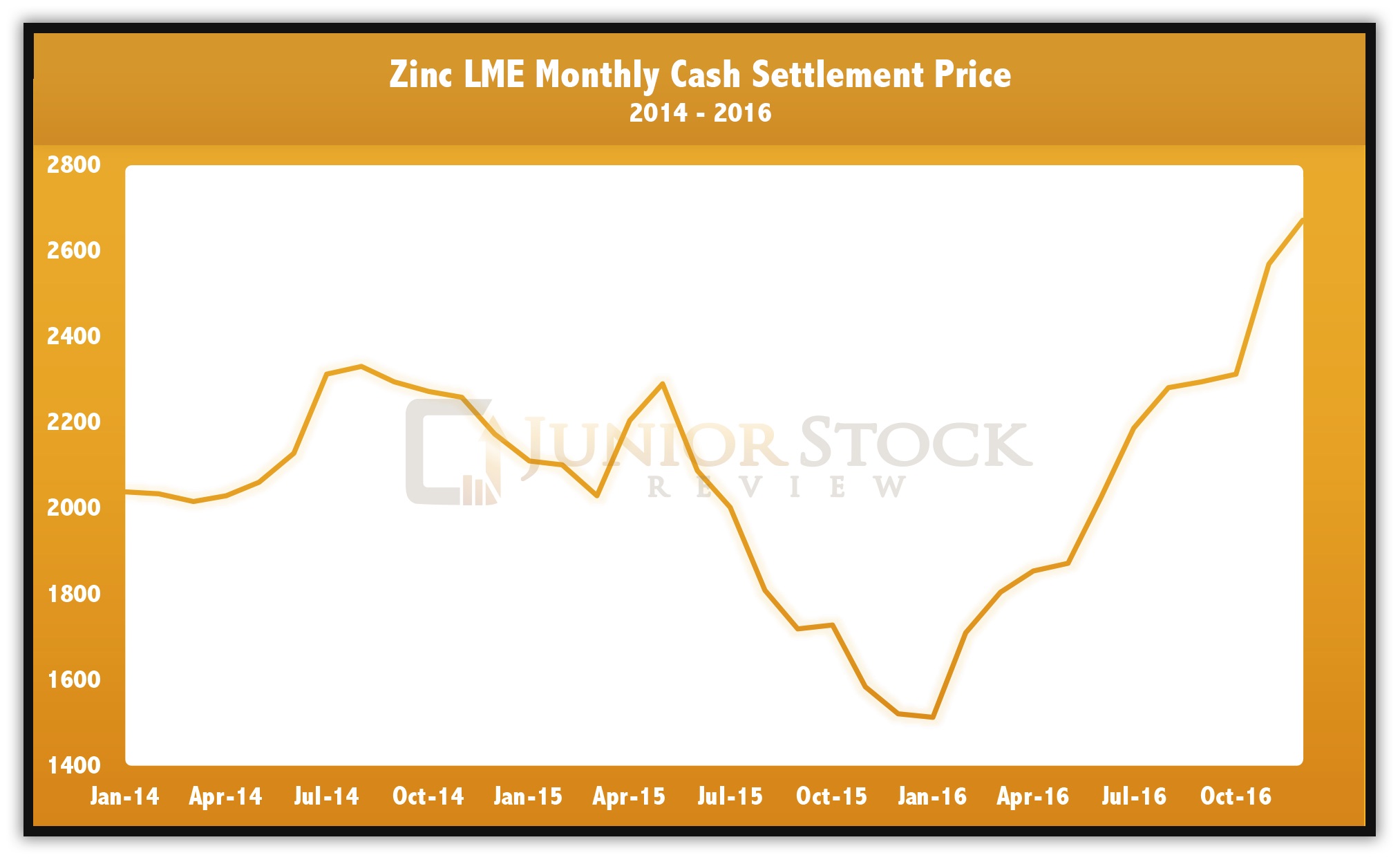
Zinc has exploded upward from its low in January of 2016 and it doesn’t appear to be coming down any time soon. Supply constraints caused by mine closures, mining issues and Glencore’s 500K tonne production cut have led the way to higher zinc prices in 2016.
Source: London Metals Exchange
To understand this bullish trend in zinc prices, I've put together a 2-part series examining the supply and demand fundamentals of the zinc industry. Here, in Part 1, I'll examine the supply side of the zinc market, including a few tidbits on the zinc mineralization and the ore bodies in which it's found. Enjoy!Zinc Mining
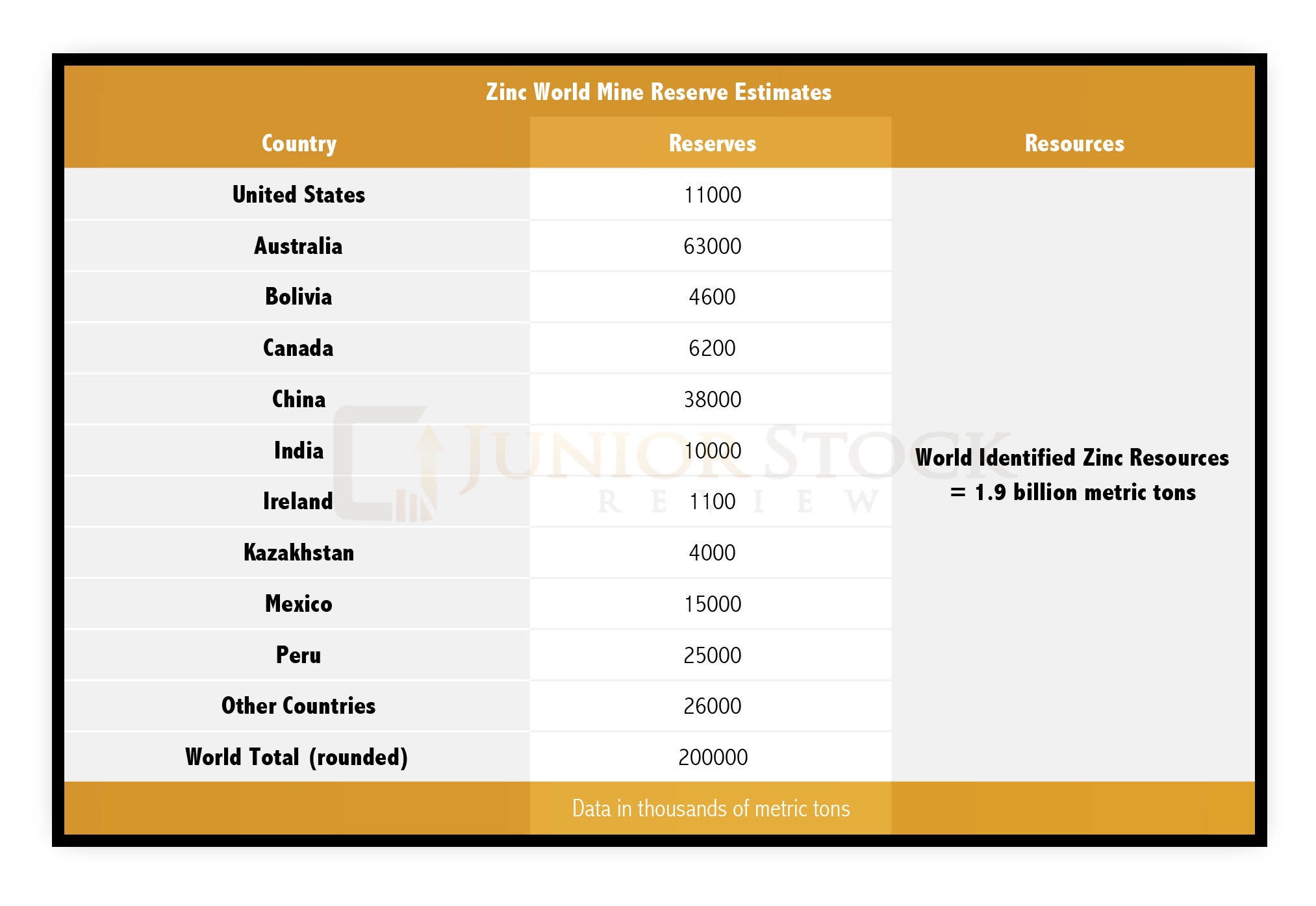
There's an abundance of zinc in the earth’s crust, but like many metals, abundance doesn’t necessarily mean it can be extracted economically at the current price. Because of zinc’s relative abundance and important uses, zinc is mined in over 50 countries. Here's a look at the current world zinc reserves:
Source: U.S. Geological Survey
Some commonly found mineral forms of zinc are:- Sphalerite (zinc blende) – the most commonly mined zinc mineral in the world. The Sphalerite Mineral contains 67% zinc.
- Marmatite – a zinc-iron sulfide, which is commonly found but rarely mined
- Smithsonite (calamine) – zinc carbonate, typically found near surface
- Hemimorphite – hydrated silicate
- Willemitte
- Volcanic hosted Massive Sulfides (VMS)
- “[VMS] deposits are predominantly stratiform accumulations of sulfide minerals that precipitate from hydrothermal fluids at or below the sea floor, in a wide range of ancient and modern geological settings (Figs. 1, 2). They occur within volcanosedimentary stratigraphic successions, and are commonly coeval and coincident with volcanic rocks. As a class, they represent a significant source of the world's Cu, Zn, Pb, Au, and Ag ores”~ Geo Science World
- Carbonate hosted Lead-Zinc (Mississippi Valley and Irish Types)
- “These ore bodies tend to be compact, fairly uniform plug-like or pipe-like replacements of their host carbonate sequences... Mississippi Valley Type or MVT ore deposits, after a number of such deposits along the Mississippi River in the United States... Irish-type carbonate lead-zinc ores, exemplified by Lisheen Mine in County Tipperary, are formed in similar ways.” ~Wikipedia
- Sediment hosted (SEDEX deposits)
- “SEDEX deposits form deep under the ocean where vents in the sea floor allow hydrothermal fluids to mix with seawater. These hot, saline fluids have percolated through several kilometers of sediments and crystalline rocks, picking up precious metals along the way. As the metal-rich hydrothermal fluids hit the cool sea water, they precipitate material onto the sea floor at and near the vents. Metal-rich minerals are deposited between layers of fine-grained mud, sand and silt.”~ Geology for Investors
- Intrusion related (high sulfidation, skarn, manto, vein)
- “These deposits are typically found in carbonate rocks in conjunction with magmatic-hydrothermal systems and are characterized by mineral association of calcium and magnesium. Typically the ore body contains more lead than zinc and is associated with silver.” ~International Zinc Association
- Zinc ore, water and chemicals are mixed together in banks of flotation cells.
- Air is then constantly blown into the cell, providing constant agitation of the solution.
- The zinc sulphide particles stick to the air bubbles which rise to the top of the cell.
- The tailings or unwanted metals of the solution sink to the bottom of the cell, leaving the concentrated zinc sulphide on the surface.
- After a period of time, the zinc sulphide concentrate can be skimmed from the cell's surface, dried and packaged for delivery to the smelter, where the concentrate will be further refined.
- Not all concentrates are created equal, as the residual elements such as the amount of iron make some concentrates more desirable than others due to their lower refinement costs.
- It should be highlighted that the transportation of the concentrate to the smelter is the mine's responsibility and, therefore, in some cases, makes up a huge portion of their cost. Needless to say, it's an advantage to have a smelter in close proximity to the zinc mine.
Zinc Mine Supply
Source: International Lead and Zinc Study Group
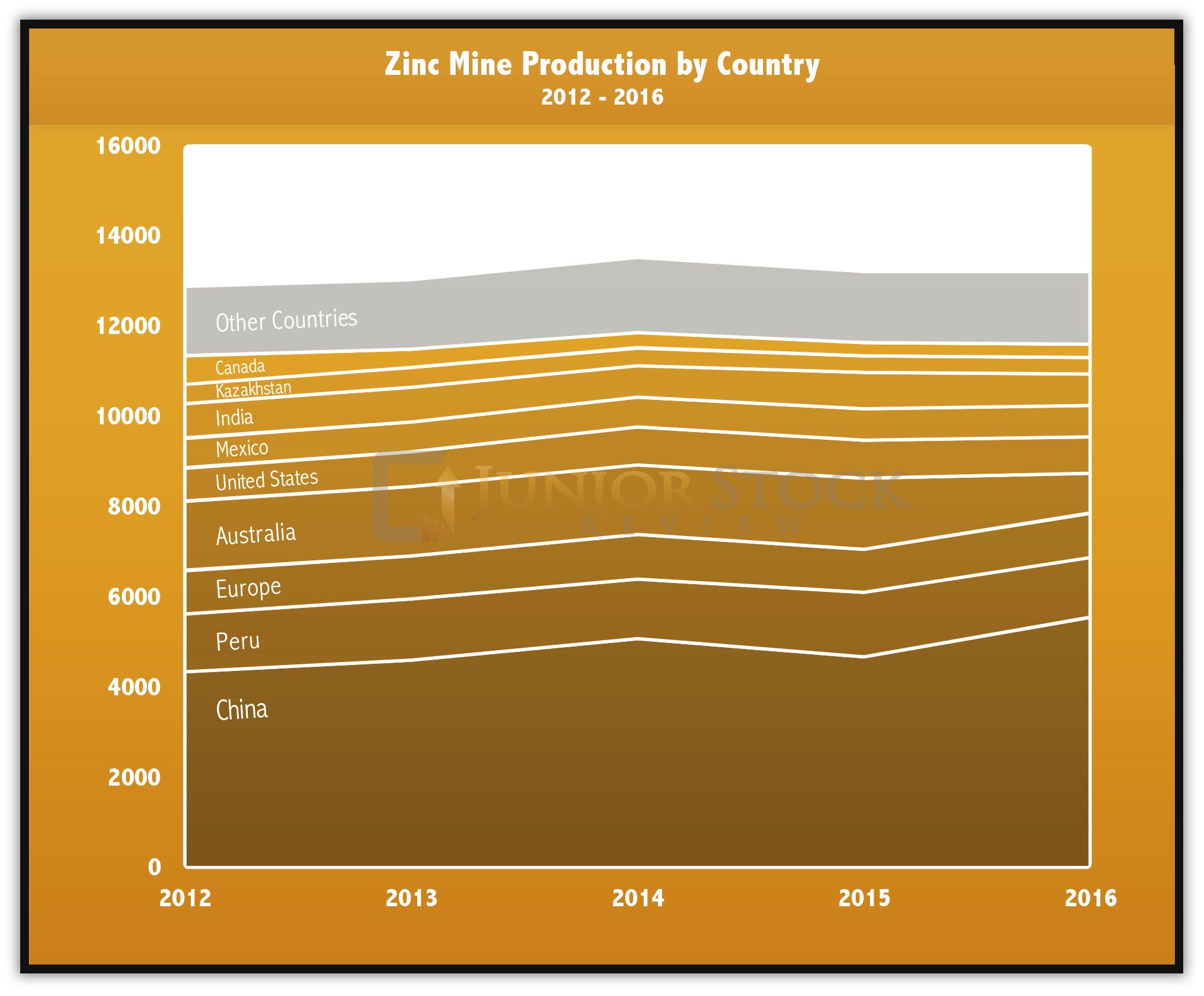
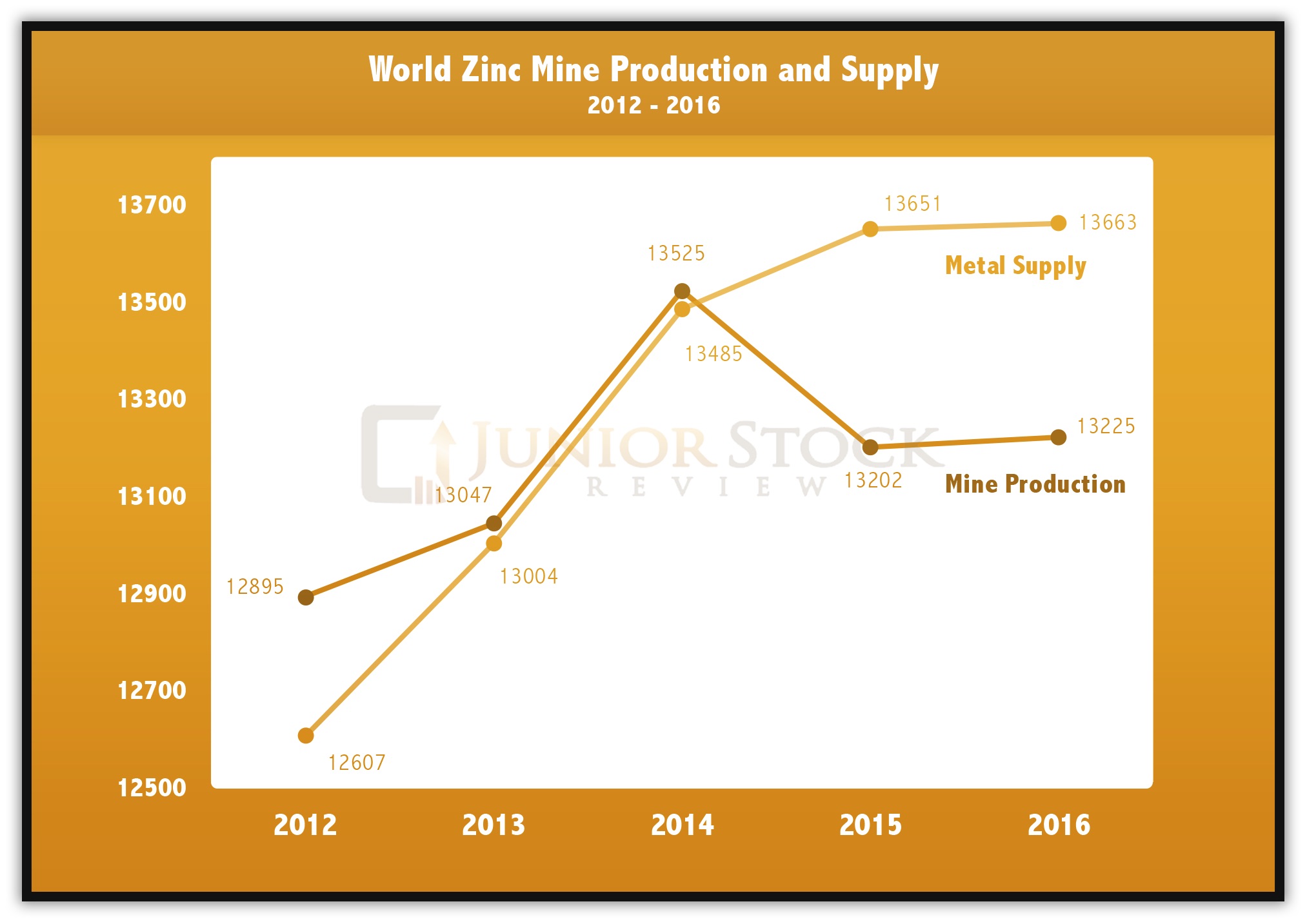
Zinc is mined all around the world, but a couple of spots in particular make up roughly half of the world’s mine production each year; China and Peru. In reality, China is the heavyweight when it comes to zinc production as its 5.5 million tonnes of zinc production is 4 times as much as the next largest producer, Peru, with 1.3 million tonnes. Australia is an honourable mention as before 2016, it held the position as the 2nd largest zinc producer in the world. Over the last year, China has ramped up its production by almost 20%, however, this big leap in mine production was almost erased by the drop in production by the rest of the world. In total, 2016 ended with 22 more tonnes produced than 2015. The caveat to this analysis is that any data from China should be taken with caution as it may not be completely reliable. The countries with the largest drops in zinc mine production since 2015 were Australia at -43.1% or 680K tonnes, India at -16.8% or 138K tonnes, Peru at -6.0% or 85 tonnes, and the United States at -2.3% or 19 tonnes.
Source: International Lead and Zinc Study Group
Australia
Australia’s production was drastically cut in 2016 due to the shutting down of MMG’s Century Mine. Century was Australia’s largest open cut zinc mine and was highly valued by smelters because its zinc concentrate had such low iron content, which helped minimize the smelter’s refinement costs. The Century Mine’s loss of production will have to be filled by an increase in production from other mills or new zinc mines coming into production, or a combination of the two. Additionally, on October 9, 2015, Glencore announced a reduction in its mine production by 500K, or a third of their annual zinc metal production, across their operations in Australia, South America and Kazakhstan. The reason for the reduction? The company states that the low zinc and lead prices do not properly reflect the metals scarcity and, therefore, they're moving ahead with the cut in production until prices rise. Glencore’s reduction affects its Australian mines by approximately 380K tonnes, and its Peruvian operations by 80K tonnes. As the zinc price rises, Glencore may decide to bring this production back online , which will not happen overnight, but will have an impact on the zinc market supply dynamics when it does.India
Indian zinc is mined by Hindustan Zinc Limited (HZ) a subsidiary of Vedanta Limited. HZ’s production is led by their flagship operation, the Rampura Aqucha Mine (RAM), which has a zinc reserve of 51.1 mt at 14.0% Zn, and an ore capacity of 6.15 mtpa. Details can be found in HZ corporate presentation from last summer and the summer of 2015. In particular, look at the last slide of 2015’s presentation. The last slide details HZ’s mine reserves, highlighting the quickly declining open pit portion of the Rampura Aqucha mine. The open pit will be depleted by 2018, removing a significant source of zinc from the global market. The plan is to transition this into an underground mine, where there is still a substantial amount of zinc contained, however, they've experienced issues with the transition.United States
American zinc mine production was impacted by Nyrstar’s placing of its Middle Tennessee Mines (MTN) on care and maintenance. The news release issued on December 7, 2015 outlines that the company’s decision to put the mining operation on care and maintenance was related to the current zinc price and, therefore, to minimize their cash consumption, they had to take action. MTN’s impact on the market is around 50K tonnes per annum. On January 7, 2016 Nyrstar announced the formal launch of the sale process for all or the majority of its mining assets. Further, on September 27, 2016, Nyrstar announced that it would be restarting its MTN operations, given the rise in the zinc price and its expected sustainability in the future. The restart of MTN will cost USD $14 million, and it will take over a year until the mill is at full production. Given the current bullish outlook for zinc prices, I think that these assets will find a buyer. Also, American production will be affected by zinc production declines from one of the world’s largest producing mines, Teck’s Red Dog, which is located in Alaska. In early 2016, Teck announced a forecasted reduction in its zinc production in the years ahead; see SEDAR for further information.Future Mine Production (Restarts / New)
There are some new and existing mining projects that are scheduled to come online in the next few years, stretching out to 2021. Here's a list of the biggest 4:- India – HZ’s Underground Portion of RAM
- South Africa – Vendanta’s (Exxarco/Sterlite) Gamsberg mine
- Australia – MMG’s Dugald River mine
- Peru – BHP/ Mitsubishi / Glencore / Teck's Antamina mine expansion