Posted on

Genesis Metals Corp. – Gold Exploration in the Heart of the Abitibi Greenstone Belt

Grain Morphology

What is the significance of surpassing $1400 USD per ounces of gold?

Personally, I view the price of gold as a bell weather for the global economy, essentially signalling the health of markets. Without a doubt in my mind, the complexity of the global marketplace is only increasing and because of this, I can’t help but think that any of these attempts to control it will fail and only add to the damage that has already been done.

Ultimately, I believe, we are headed to some sort of reset of the global monetary system and breaking $1400 USD per ounce, a price we haven’t seen since 2013, signals we are getting closer.

So what does this mean for the junior gold companies? Great question.

As many of you will know, I think a bullish outlook for a metal price is a poor reason to invest within the junior resource sector, however, while this is my view, it seems that the vast majority of investors think differently.

Therefore, I suspect, given the rise in the gold price, we may be entering a new bull market in gold stocks.

Today, I have for you an update on Genesis Metals Corp., a junior gold company which is exploring and developing their flagship Chevrier Gold Project, in the world famous Abitibi Greenstone Belt in Quebec.

Let’s take a look.

Genesis Metals Corporation

MCAP – $7.4 million (at the time of writing)

Shares – 109.2 million

FD – 132.1 million

Management and Advisors – 16%

Other Major Shareholders – Osisko Mining, Eric Sprott, Gold 2000, Delbrook Capital, US Global Investors, SIDEX/SDBJ and Medalist Capital – 34%

Retail – 50%

Chevrier Gold Project – 2019 Exploration

2019 marks a reboot in Genesis’ approach to developing its flagship Chevrier Gold Project.

What do I mean by this? Well, the last few years, much of the exploration and development dollars have been spent on expanding and delineating the project’s Main Zone.

In all, the money has been well spent, as the updated resource estimate, released earlier this year, reveals the Main Zone has an indicated resource of 395,000 ounces at 1.45 g/t and an inferred resource of 297,000 ounces att 1.33 g/t, using a 0.5 g/t cut-off.

This field season at Chevrier will be different, as the company looks to generate new high-grade gold targets, as they have expanded their land package along the Fancamp Deformation Corridor and, more importantly, have enlisted Dr. Rob Carpenter and the highly accomplished team at Vector Geological Solutions to lead a modern exploration program across the entire property.

The Vector team is made up of Dan MacNeil and Dr. Alan Wainwright, each which has had extensive exploration experience and successes within the sector.

Exploration will begin with property-wide till sampling. For those who aren’t familiar, till sampling is used to identify target metals, such as gold, in areas which have been glaciated.

In these regions, glaciers have eroded the target metals from the underlying rock and transported them away from their source. Therefore, today, by digging down to the till layer which sits right above the bedrock, exploration teams can better sample for gold.

Till sampling is a highly effective tool in an exploration company’s arsenal and will reveal where they should focus their attention with localized geological mapping, trenching and geophysics.

It is key, that while the existence of gold within the till samples is obviously paramount, the Vector team isn’t necessarily as concerned with the grade of gold, but more on the gold grain morphology.

MacNeil explained to me that the grain morphology is vital in understanding the source of gold, as the shape and surface texture of the gold grain is an indicator of how far away the gold may have travelled from its source.

Source: Research Gate – Grain Morphology Example

Chevrier has been expanded to 275 square kilometers along one of the most famous gold corridors within the Abitibi. With this methodical approach to exploration, I think that there is a high probability that they will identify a few great high-grade gold targets for the next drill program.

Secondly, we have to keep in mind that the Main Zone is still open at depth, which, in my mind, shows great promise for further expansion of the deposit. The Abitibi is famous for its deep, steeply dipping high-grade gold deposits and, therefore, the next drill program should be chock full of high potential targets.

Changes in Leadership

On June 24th, Genesis announced the resignation of Chairman and CEO, Brian Groves, and the appointment of Adrian Fleming as Chairman of the Board, and Jeff Sundar as interim CEO.

To refresh your memory, Fleming is a geologist by trade with over 40 years of experience in both technical and executive roles. Some highlights include being a founding director at Northern Empire and Underworld Resources, both of which were acquired by majors.

Additionally, Sundar has been a driving force behind Genesis as its President over the last few years and, I think, will do well in his new role. Sundar has over 20 years of experience in the mining industry, and is a former Director of Northern Empire, which was sold to Coeur Mining for $117 million in October of 2018. Also, he was a VP/Director of Underworld Resources, which was acquired by Kinross for $140 million in the last cycle.

The Genesis team is rounded out by Exploration Manager, Andre Liboiron; Director, John Florek; Independent Director, Keenan Hohol; Independent Director, Robert Scott and Steve Williams.

A Discovery Group Company

Genesis Metals Corp. is a part of the Discovery Group of Companies, which is led by John Robins and Jim Paterson. Discovery Group has churned out some of the best stories the sector has seen over the last few years.

A few of the M&A successes have been Kaminak Gold Corp., which was sold to Goldcorp for $520 million, and Northern Empire Resources Corp. which, as my readers, you are very familiar with; they were sold this past summer to Coeur Mining for $117 million.

Additionally, you have other high-quality resource projects, such as Bluestone Resources Inc., Fireweed Zinc Ltd. and Great Bear Resources, all of which have had success over the last year, as they move their projects forward.

In short, Genesis’ entry into Discovery Group speaks to the potential of the company and to its management team, a group in which Robins and Paterson must have confidence, as their reputations are now linked.

Strategic Advisors

While not being a part of the company’s main team, strategic advisors can play key roles in the development of a project. In particular, Genesis has done a great job assembling a cast of advisors that have resumes filled with success, particularly in exploration, resource expansion, capital markets and, arguably most important to the Genesis story, M&A.

Being a Discovery Group Company comes with not only the notoriety of being a part of the group, but also means, in this case, that both Robins and Paterson will play strategic advisor roles for the company.

John Robins is a professional geologist by trade with a wide variety of experience over the course of his more than 30 years within the industry. Robins was both a founder and Chairman of Kaminak and, in 2008, was recognized for his achievements in mining exploration by the Association for Mineral Exploration British Columbia with the H.H. “Spud” Huestis Award.

Jim Paterson has more than 22 years within the mining industry with experience in raising capital, M&A, joint-ventures, spin-outs, RTOs and IPOs. Currently, he is Chairman and CEO of Valore Metals Corp and was a founding Director of Northern Empire Resources Corp.

Genesis will benefit greatly from having these two men as strategic advisors, as they move their flagship Chevrier Gold Project forward.

New Additions

In November of 2018, Genesis announced that Dr. Rob Carpenter, Dr. Andrew Ramcharan and Garrett Ainsworth would be joining their list of strategic advisors.

Dr. Carpenter is a professional geoscientist with over 25 years of experience in the resource sector. He is best known as co-founder, President and CEO of Kaminak Gold Corporation (2005 to 2013) and its multi-million ounce Coffee Gold Project, where he is credited with the initial discovery and leading the company to it maiden resource estimate. Kaminak was sold to Goldcorp in 2016 for $520 million.

Dr. Ramcharan is a professional engineer with over 18 years of experience in operations, project evaluation, M&A, finance and investor relations. Most recently, he was a managing Director of Project Evaluation for both debt and equity financings at Sprott Inc.

Last but not least, Garrett Ainsworth is a geologist by trade and former VP Exploration for NexGen Energy, which discovered the world-class Arrow Uranium Deposit in Canada’s Athabasca Basin.

4th Best Jurisdiction for Mining Investment in the World

From a jurisdictional standpoint, it doesn’t get much better than Quebec when it comes to mining investment attractiveness. The Fraser Institute (FI) gives Quebec an index score of 88.38, ranking it 2nd in Canada and 4th in the world. FI’s mining investment attractiveness index score is reflective of both the mineral potential and the government policy perception of the region.

Quebec’s Mineral Potential

Quebec is home to 25 producing mines and over 350 surface mineral mining operations, putting the value of Quebec’s mineral shipments at $8.7 billion in 2014 (Investissement Quebec). Quebec is Canada’s 2nd largest producer of gold, largest producer of iron and zinc, and the only North American producer of niobium. The mineral wealth is evident and is a big reason why FI ranks Quebec among the world’s top ten in mining investment attractiveness.

Highlighting Quebec’s world-class mineralization is the Abitibi Greenstone Belt (AGB), which is 150 km wide and stretches 650 km from roughly Wawa, Ontario to Val d’Or, Quebec. The belt has produced millions of ounces of gold over its history, with the Cadillac Gold Camp, Virginiatown, Rouyn-Noranda Gold Camp, and Val d’Or Gold Camp being just a few of its largest contributors.

genesis updated abitibi map

Quebec Politics and Infrastructure

The government of Quebec supports mineral exploration within its borders with a tax credit system that refunds 25% of eligible exploration expenses for non-operating corporations, and 10% of eligible exploration expenses for operating corporations (Financial Incentives). So, roughly, for every $1 of non-flow through raised capital spent by a Quebec based mineral explorer, 25 cents will come back to the company, which can effectively be rolled right back into further exploration work. This is not only a huge plus for the company and its shareholders, but an ingenious way for the province to promote mineral exploration.

The long history of mining in the AGB means that most regions of the belt are accessible or near infrastructure such as highways, rail, power, and deep water ports along the St. Lawrence Seaway. Also, Quebec boasts some of the most competitive electricity rates in Canada, as its hydroelectric dams constitute a major portion of its electricity production.
Finally, Quebec takes great pride in a transparent mining system, which is built around three key pillars:

“Open access to resources is ensured on the largest possible portion of territory, Mineral rights are granted on a first-come, first-served basis and if a discovery is made, the title holder can be reasonably sure of obtaining the right to develop the resource.” ~ Investissement Quebec

NOTE: Quebec provincial funds, SIDEX, SDBJ and FTQ, have participated in past private placements in Genesis and now own a good portion of stock. In my mind, it’s a great indication of the potential value that the Chevrier Gold Project may have moving forward.

Favourable politics and world-class geology – for me, it doesn’t get much better than Quebec, as far as your investment buck goes!

 Chevrier Gold Project

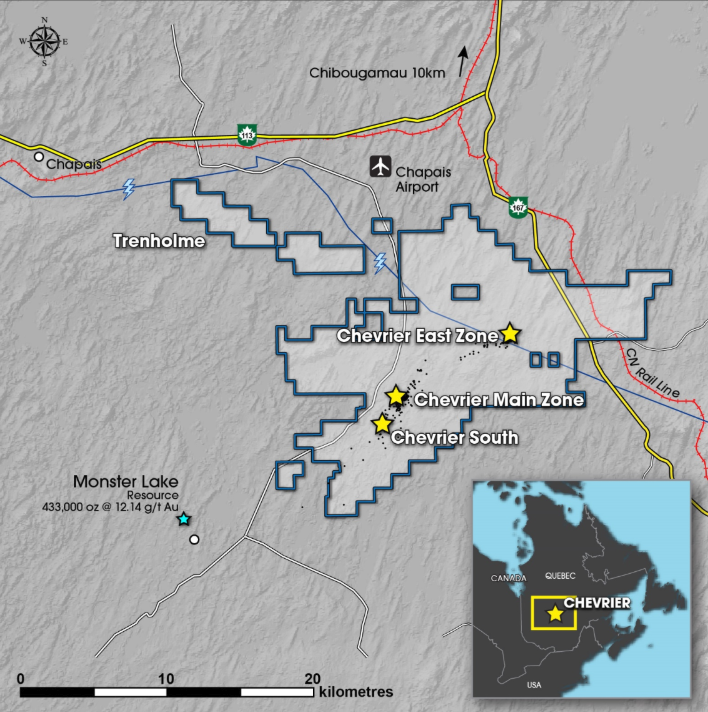
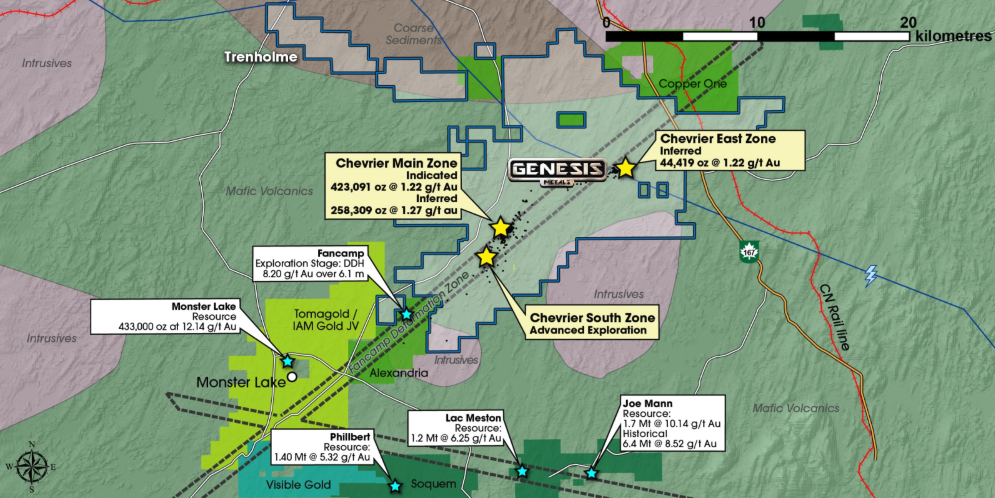
Genesis’ 100% owned Chevrier Gold Project encompasses 275 square km and is located 35 km south of Chibougamau, Quebec, in the heart of the Abitibi Greenstone Belt. Chevrier straddles 15 km of the Fancamp deformation zone, and is 15 km northeast of IAMGOLD’s high-grade Monster Lake gold deposit.

NOTE: The IAMGOLD and Toma Gold Monster Lake JV released their maiden inferred resource of 433,300 ounces of gold at 12.14 g/t at a 3.5 g/t cut-off.
Chevrier Gold Project History

Prior to Genesis, the area in which the Chevrier deposit is located was owned and explored by Inmet Mining Inc. (Minnova), which, in 1989, was the first to drill the now Main Zone of Chevrier, where they intersected gold grading 5.4 g/t. The property was then purchased by Geonova Explorations, which outlined Chevrier’s Main Zone.

In 2007, the property changed owners once again, with Tawsho taking the reins. They went on to complete a 2,792 km aeromagnetic survey, a ground EM Time Domain survey, 24 diamond drill holes, an independent NI 43-101 resource estimate (by Met-Chem Canada Inc.), and a 5,000 ton bulk sample.

Since Genesis acquired Chevrier in Q2 of 2016, it has completed a long list of work which includes the inventory of more than 70,000 m of drill core, the re-sampling and re-assaying of selected mineralized intervals, re-sampling of 4 trenches, 3D modelling of Main, South and East Zones, 50+ km of IP surveying, and executed a 10,000 m drill program, which focused on confirming historical Geonova drill holes, exploration step out holes on the Main Zone Deposit and the exploration of other IP and geological targets. Results from this program can be found on Sedar.

New Geological Model

Over its 29 year history, Chevrier has seen 213 drill holes, totalling over 87,000 meters. However, the Genesis team is the first to consolidate, re-evaluate and form a comprehensive geological model regarding the Main Zone’s gold mineralization.

Below is an image of the mineralization within the Main Zone, using a 0.3 g/t Au grade shell.

Chevrier Gold Project – Plain View of the Main Zone Deposit

Chevrier Gold Project Resource Update

Using the new geological model and the compiled data from the most recent drill program, Genesis has released an updated resource for the Chevrier Gold Project. The updated resource includes the Main and East Zones and, as described in the previous section of the report, envisions a mining scenario in which there is both an open pit and underground workings.

Indicated Gold Resource – 395,000 ounces averaging 1.45 g/t

Inferred Gold Resource – 297,000 ounces averaging 1.33 g/t

NOTE: With a combined indicated and inferred resource of 692,000 ounces of gold, and with Genesis’ MCAP sitting below $10 million, this presents an interesting value proposition. Keep in mind, not all ounces are of equal value, but nonetheless, this is a good high-level indicator of value.

This is a great start for the Genesis team as, collectively, – indicated and inferred – they sit very close to 1 million ounces of gold in an area of the Abitibi which looks poised for development in the coming years. Clearly, the next move for the Genesis team is to expand this new resource, which will be aided by their newly formed strategic advisors team.

2019 and beyond should be very interesting for investors as they move forward.

Chevrier Resource Expansion

In terms of expanding the deposit, one of the best possibilities comes with drilling deeper, as the Principal Zones remain open at depth.

updated long section

Chevrier Gold Project – Long Section of the Main Zone Deposit

To date, I believe there have only been a handful of holes drilled below 400m, each of which hit mineralization. Given the nature of many of the Abitibi gold deposits, such as Osisko Mining’s Windfall Lake Gold Project, there is certainly the potential for more ounces to be found at depth.

I look forward to the next drill program which will test the extent of the mineralization at depth, and will most certainly tackle the other high priority targets on the property.

Concluding Remarks

The new gold bull market may be upon us, owning undervalued junior gold companies, such as Genesis, could be highly advantageous in the weeks and months ahead.

Investing in junior resource companies is risky and, therefore, in my opinion, you need to seek out companies that are led by strong management teams, who can navigate the risk and propel the company forward.

Genesis Metals Corporation is a company which I am invested in and believe has the horsepower, in terms of the management team, to move the Chevrier Gold Project forward. Clearly, the company must focus on expanding the resource by drilling deeper and exploring the property’s high priority targets.

As outlined in my report, there is a strong list of advisors who have “been there and done that” within the resource sector, and I am confident will have a great influence on the direction of Genesis moving forward.

Summarizing my thesis for investment, here are what I think are a few of Genesis’ most compelling strengths:

  • A proven management team: Sundar, Fleming, Florek and Liboiron
  • Strategic Advisors: Discovery Group’s John Robbins and James Paterson, Dr. Robert Carpenter, Dr. Andrew Ramcharan, and Garrett Ainsworth.
  • Strategic Shareholders List Headlined by: Osisko Mining, Eric Sprott, Delbrook Capital, Gold 2000, US Global Investors, SIDEX/SDBJ/FTQ and Medalist Capital
  • Located in the 4th best jurisdiction in the world, Quebec
  • Systematic 2019 exploration program led by Vector Geological Solutions – high-grade gold targeting
  • Expanded land package with high exploration potential, Chevrier Gold Project and October Gold Project
  • Great bang for their drilling buck, as their all-in drill costs, thus far, have roughly averaged $220 per metre

Don’t want to miss a new investment idea, interview or financial product review? Become a Junior Stock Review VIP now – it’s FREE!

Until next time,

Brian Leni  P.Eng

Founder – Junior Stock Review

Disclaimer: The following is not an investment recommendation, it is an investment idea. I am not a certified investment professional, nor do I know you and your individual investment needs. Please perform your own due diligence to decide whether this is a company and sector that is best suited for your personal investment criteria. Currently, I do not own Genesis Metals Corporation stock. All Genesis Metals Corporation analytics were taken from their website and press release. Genesis Metals Corporation is a Sponsor of Junior Stock Review.
Posted on

A Conversation with Justin Tolman, Economic Geologist at Sprott Global Resource Investments

“Give a man a fish, and you feed him for a day. Teach him to fish, and you feed him for a lifetime.”

An obsession with the “how” or “why” instead of the “what” is integral, in my opinion, to being successful in the world of investment. While the “how” can often be enough to make your eyes glaze over, it’s what ultimately separates the wheat from the chaff.

I believe the success I’ve had in my investing career, thus far, is due in large part to listening to and informally learning from successful investors within the sector.

Today, I’m sharing an interview I did with someone to which you should pay attention. It’s key to learning the “how” and the “why” of investment within the resource sector.

Justin Tolman is an economic geologist by trade and is a part of a world-class technical evaluation team at Sprott Global Resource Investments. In our conversation, we cover a number of topics including his background, jurisdictional risk, lessons learned in the sector and much more.

Enjoy!

Brian: You joined Sprott Global Resource Investments last year as an economic geologist within their technical team. The Sprott technical team is known throughout the sector as one of the best in the business and, thus, the mere fact that you joined them, in my view, speaks volumes about your technical acumen.

Can you give us an overview of your work history and how it brought you to where you are today with Sprott Global Resource Investments?

Justin: I have degrees in both economic geology and business, but I think more pertinently, I spent the last 20 years on the operating side of the resource world doing what I could do ensuring that mines were profitable, exploration was successful, deals were accretive, and that was tremendously rewarding. I got to go out sleeping under the stars looking for gold deposits for weeks at a time. And I’d work in big underground mines a mile under the earth. At the right time of the year, you don’t see the sun until the weekend. But I used to joke that all that time I was trying to work at what I wanted to be when I grew up. And the net result was that I got to have some great world-class mentors. I got to be molded in the crucible of some exciting discoveries. But I spent those two decades always looking to learn the next thing, find ways to add value.

Inadvertently, I ended up as this broad, renaissance geologist, which sort of primed me for the current role with Sprott, where a key part of the job is trying to identify top tier management teams or be earliest into new discoveries.

Brian: For me, jurisdictional risk is an interesting subject because everyone has their own criteria for what constitutes risk.  

A good example is Russia. Many jump to the conclusion that it’s a VERY risky country and, therefore, not a place to invest. I don’t necessarily disagree; most of the propaganda about Russia, today, is ‘negative.’

Let’s, however, consider one of the criteria listed by the Fraser Institute in its examination of jurisdictional risk; political stability. Relative to its peers, Russia scored low, which a lot of people translate to ‘stay away.’ While political stability is a complex factor, I was taken aback when a friend, whose company does business in Russia, said he finds this scoring comical; “does anyone really think there’s going to be some serious political upheaval while Putin is in charge?” Given the complexity of evaluating political stability, his answer isn’t complete, but it still reveals the contrast in views – those who have experience in these ‘risky’ jurisdictions, and those who rely solely on narrative to form their opinions.

How do you view jurisdictional risk and how does it tie into the investment analysis of a junior resource company?

Justin: Risk is a fascinating subject especially with resource investing. Jurisdictional risk obviously is nuanced, subjective and multi-faceted, not only for people on the outside trying to evaluate it, Also for those teams who find themselves operating across different cultures and borders. Obviously, jurisdictional risk is one element that goes into a risk matrix. It’s a foundational element, and it’s one that even the best teams can only ever have limited influence over. But, like other types of risk, it can be mitigated, and the reality is some groups will be better at forecasting probable outcomes. Some teams will be better at operating in certain environments.

Personally, I can be quite risk tolerant with respect to jurisdiction. I can justify investments in comparatively risky locations. The caveat is that the returns have to be sufficient to warrant it. If you look at somewhere like the DRC, global risk consultants consistently and quite rightly rank it as having very high political and operational risks. But committed, in country exploration continues to highlight an emerging camp of world-class copper mines.  That sets up an interesting dynamic.

As a final comment, you need to be quite judicious in applying broad risk categories to entire jurisdictions, whether it’s countries or provinces, the reality is that often it depends. Some superficially low risk places for mining investment, like Peru, in actuality can be a very complex patchwork of attractiveness depending on local community attitudes, legacy issues, and a host of other things. That’s one of the things that we like to think differentiates us at Sprott we get out on the ground in these areas early and develop a deeper understanding for this aspect. A big part of my job is spending time on the ground at lots of these projects first-hand.

Brian: In my view, current market sentiment is about as bad as I have seen it within the resource sector. Many of the emails I have received in the last month, or so, ask my opinion on where the market is headed or if they should follow the adage, “sell in May and go away.”

In your opinion, are investors wasting their time worrying about the direction of the market?

Justin: My opinion is that investors should absolutely be aware of where they are in a cyclical market. You should be allocating some of your brain capacity curating an opinion or seeking trusted advice on the direction of the market. Unquestionably, there’s value to be unlocked for those who can position themselves accordingly. But honestly, it’s not something I worry about on a day-to-day basis. Instead, one of the things that we do as part of the technical diligence team is to identify companies and assets that will be able to operate profitably or attract capital at any point in a price cycle, good or bad. And this way clients can anchor their portfolios around quality and the market will do what it wants.

Brian: Are market sentiment and fundamentals like the chicken and the egg? Meaning, does it make a difference which one comes first to alter the tide from a bear to bull market?

Justin: That’s a great question. I suspect those two elements certainly exert some influence over each other. The trick would be to extricate the relative proportions of each at any given point in time. But to borrow from one of the mental models of Warren Buffet and Charlie Munger, I feel we may have drifted outside my circle of competence at that this point. I just let the market do as its want. Instead, I try to start with an estimate of an asset’s fundamental value, and then if you are able to identify where market sentiment has drifted a long way from that starting point, it helps to guide future decisions from there. I’d much rather look at a tree than the forest sometimes.

Brian: In my opinion, exploration companies are a great way to speculate within the junior resource sector, especially during a bear market, as discovery pays no matter where you are in the market cycle.

While I see the chance for high returns, it definitely comes with high risk, as the odds of finding an economic deposit are stacked against you.

Firstly, do you agree with my statement regarding speculation in exploration companies in bear markets? Secondly, in your view, what are the most important steps or criteria in evaluating an exploration company and its probability of success?

Justin: Great question, and it might not be a short answer. Instead, I might tweak that statement to read, “Speculating in the best exploration companies at the right time in a project’s life cycle can provide outsized returns no matter where you are in the market.” It might be self-evident, I guess, but not all exploration companies are created equal. Most hemorrhage money on ineffective or inefficient exploration. So as you allude to in the second part of your question, the trick is identifying those companies with the greatest probability of success. And you have to layer over that looking at those groups who also show good financial acumen. Corporately, can they attract funding for their ideas? Are they going to be good stewards of capital? So it always starts with management. Are they ethical? Are they motivated? Can they build social license? And then need to look at their experience in the deposit style, project stage and  region that they’re operating in? Do they know what a mine looks like? Another way of saying this is “do they know when to cut bait and move to the next target or do they fall in love with their projects?”

Pre-discovery, it’s important to have an appreciation for the region and the type of deposit for which the company is exploring: its geology, its prospectivity, the maturity of the region. And when you zoom in to the project scale, the list of diligence criteria multiplies again. As they progress into drilling, can it have sufficient size to be material to someone? How will it be mined? What process will be required to recover the minerals of value?

At the end of the day, if you can’t recover something economically, your discovery becomes moot, and it gets relegated to a technical success, the trick is recognizing this as early as you can. For those people who can see that ahead of others, there’s a huge advantage there.

Brian: Recently, Irving Resources released their first drill results from their Omu Gold Project in Japan. Irving is targeting a low sulphidation epithermal system, which they have systematically identified over the course of the last couple of years.

The initial results are very interesting as it appears to me that they have discovered, on their 2nd hole, the upper portion of the boiling zone. The market responded very well to these results, but it is clear that more drilling is needed to better understand and identify the main source of the hydrothermal system.

Why is it important to identify the boiling zone within a low sulphidation epithermal deposit?

Justin: Boiling in low sulphidation epithermals is a powerful and complex mechanism. It’s associated with a drop in the temperature and the pressure of the system. And this in turn causes a bunch of gasses to escape. It changes the pH a little. But most importantly from our point of view, it causes precious metals like gold and silver to drop out of solution and be deposited locally. So that’s a lot of words to say that for this type of deposit, if there was gold available in the system, this is where it would be concentrated.

BrianGenerally speaking in regards to a system such as this, moving forward, what does failure look like?

Justin: We’ve obviously been in a bear market the last few years when the question is phrased as what does failure look like rather than the other way around. The sinter which marks the target area in this case is comparatively large, and the drilling’s at a very early stage still. So the company is looking for a blind feeder at depth underneath this sinter. ‘Blind,’ here, is in the sense that they don’t know exactly where this is located under the alteration. They’re kind of poking holes in there trying to vector. Now they have some indications that the boiling zone is deep. They have indications that it could be auriferous because they have a thin hit from just their second hole on the property, which is a solid start.

In this case, exploration is an iterative process. You need to be looking at each drill result and the geology successively to help you vector in three dimensions. These systems, generally, here have a well-established zonation and you can play a game of ‘Warmer-Colder’. Failure could happen by degrees as the available space for an economic deposit progressively gets whittled away hole by hole. Success could happen all at once. This is a good example of one of the things that we actively monitor as a program progresses to help us develop our own opinions on prospectivity.

For those interested in getting a better feel for Omu or projects like this, my colleague, Andrew Jackson, was on site late last year. Some photos from that site visit and many of our others are just available now at SprottUSA.com.  We’re trying something new and making images from our field work available on this platform with some commentary. For those interested, that’s an easy way to track the things we’re looking at in-house from a technical perspective.

Brian: Continuing with the exploration theme, last year, Evrim Resources’ Cuale project was in the headlines for the discovery of what many thought had the potential to be an economic deposit. This was not the case, however, as the ultimate ground truthing mechanism – the drill, delivered dusters at depth.

In your view, can investors learn anything from this failure?

Justin: There’s always lessons from failure, often more contextual and more painful ones than from success, right?

Brian: Very true.

Justin: At the outset, there was no way to know categorically what the drilling would show. Now, Cuale was an atypical gold system in many respects. There are absolutely learnings available there, technically and geologically, for example, the difference between a hand dug trench versus a mechanical trench and how that affects where you can sample within the regolith profile, but it’s not always straightforward. Remember, Evrim had a whole bunch of major mining companies on site who looked at those rocks and were also excited by the potential.

So I think for investors, which is what you asked, a key lesson here is to take profits. Selling when a stock is going up can be hard psychologically sometimes. It’s easy for emotion and the innate tendency to project recent trends forward, and that can overcome prudence. But taking some money off the table at key junctures is often wise.

Cuale didn’t live up to expectations.  However, I think the company itself is well financed and doing quality work with credible partners.

Brian: Conferences are a great way to expand your knowledge of the sector and to speak to the people who are running the companies in which you’re investing. Personally, I think it is of the utmost importance to try and learn who these people are – you’re trusting them with your money.  

For those looking for a conference to attend, I highly suggest that you attend the Sprott Natural Resource Symposium from July 30th to August 2nd, in Vancouver. 

In your opinion, what’s the value proposition of the Sprott Natural Resource Symposium?

Justin: I attend lots of different mining and investment conferences, Brian. And each of them fills a niche within the broad arc of the industry. The Sprott Symposium distinguishes itself I think by providing quality content for investors in the natural resource space. Service providers need not apply. It’s relevant to Corporate Development teams or pure explorers, but they’re not the target audience, investors are.

The presenting companies have to be both invited and owned in-house. The guest speakers and the panel members are top notch in their fields. There’s a good balance of macro and project dynamics.

The conference itself is structured so that those presenting and those being presented to have more chances to interact, which I think lets delegates explore areas of interest to them beyond the typical investor relations pitch. The culmination of this means that the caliber of the conference participant that it attracts is actually extremely high. I get as much from talking to the other delegates as I sometimes do talking to the presenters. I always leave that symposium wiser than when I arrived.


Don’t want to miss a new investment idea, interview or financial product review? Become a Junior Stock Review VIP now – it’s FREE!


Until next time,

Brian Leni  P.Eng

Founder – Junior Stock Review

Disclaimer: The following is not an investment recommendation, it is an investment idea. I am not a certified investment professional, nor do I know you and your individual investment needs. Please perform your own due diligence to decide whether this is a company and sector that is best suited for your personal investment criteria. I do OWN shares in Irving Resources and Evrim Resources. I have NO business relationship with any of the companies discussed in this interview.

Posted on

A Conversation with Mark O’Dea, Chairman and Founder of Oxygen Capital

mark o'dea

The junior resource sector is a people business. In my view, making money consistently in a sector which is fraught with risk and failure, without a doubt, is inextricably linked to the quality of the people who are running the companies with which I am investing.

This statement, and statements like it, are very likely the most common answers you will hear from many pundits throughout the industry.  While this should now be common knowledge, however, I still hear from investors who invest and lose money with “butchers, bakers and candlestick makers.”

So, why does this still happen? I’m not totally sure. Maybe it’s the potential for a quick buck or simply investors caught up in a narrative.  Whatever the answer may be, I’m sure it will continue in the future, and that’s too bad. While it makes a select few rich, overall, the promotion of mediocrity is really bad for the sector.

In saying this, today I have for you a conversation with one of the sector’s ‘greats;’ a man and a group in which it’s worth investing.

This person is Dr. Mark O’Dea, Chairman and Founder of Oxygen Capital.

Oxygen Capital has a great track record of success within the sector, as they have provided a ton of value for their shareholders through the sale of many of their projects, such as Fronteer Gold, Aurora Energy and True Gold.

In our conversation, I asked O’Dea about the secret behind Oxygen Capital’s success, lessons he’s learned while working in the sector, his view of jurisdictional risk and more.

There’s a lot to glean from O’Dea’s answers – Enjoy!

Brian: In my opinion, one of the biggest issues facing most people is their lack of self-awareness. Whether it be in their investments or their personal lives, many people either have no idea or are prone to lying to themselves about where they are strong and where they are weak and, thus, typically fall short of their goals and aspirations.

Oxygen Capital and its managing partners definitely don’t have this issue, as their track record for success within the resource sector is among the best I have seen.

What has and continues to make Oxygen Capital successful within the resource sector?

Mark: When you start working on a project, you know reasonably soon, whether it has the potential to be an economic deposit or not, and if it doesn’t, there’s really no point in faking it.  It’s a waste of time, it destroys the trust of shareholders, and it builds the wrong type of working culture.  So, you’re much better off focusing your efforts on finding the right project.  We have lived by the philosophy of “good projects and good places” for 20 years now and it has worked out really, really well.

Over that period, I’ve been CEO and/or Executive Chairman of a number of public companies that have been acquired, because they were underpinned by projects that were either operating mines, or advanced projects that could ultimately become mines.

For example, Fronteer Gold, among other things, had the high grade Long Canyon deposit that ultimately became a mine built by Newmont, after they acquired Fronteer in 2011.  It is now one of their lowest cost mines in the USA.  Aurora Energy defined and advanced one of the largest uranium deposits in Canada back in 2009, and it was ultimately acquired by Paladin in 2011.  Its Michelin deposit needs higher Uranium prices, but it’s got all the attributes of a long life mine.  And most recently, at True Gold, we built an open-pit, heap leach gold mine in West Africa, and shortly after we poured our first gold bar in 2016, we were acquired by Endeavour Mining.  So, all of our big successes have been underpinned by high quality projects that were either mines or had the potential to become mines.  

Today, we’ve got four companies at Oxygen – Pure Gold, Liberty Gold, Sun Metals and Discovery Metals. We’ve created, in my view, one of the best exploration and development pipelines in the business.  And all of our companies continue to be underpinned by good projects, in good places.  At Pure Gold, we have the large Madsen Gold Deposit in Red Lake Ontario, which is currently the highest grade gold development project in Canada today.  We just finished a bankable feasibility study that’s underpinned by a two million ounce indicated resource, at almost nine grams per ton, with another half million ounces of inferred gold.  It’s going through the final permitting process and ultimately the goal is to become the next Canadian producer. 

Liberty is rapidly advancing three big open pit gold projects in the Great Basin of the United States.  They’re excellent projects in a Tier 1 jurisdiction.  We recently put out a PEA on Gold Strike and it shows that it’s got the makings of an excellent low cost mine.  It’s very appealing.  And we’re about to start drilling Black Pine, which is another big Carlin-style gold system that has exciting size potential.

Finally, Sun Metals, we just made a highly disruptive discovery in BC, which was frankly, one of the best high grade copper-gold intercepts in Canada in 2018.  We’re about to get back in there this summer and continue drilling to build continuity and size.  We are all very excited.  So, all of our businesses are underpinned by real projects and that’s been the key to our success.


Brian: Over the course of my life, I have learned that a large portion of what it takes to be successful is not being afraid of failure. The caveat being that it doesn’t pay to be irrationally courageous, either.

Firstly, do you agree? Secondly, can you give an example, in terms of your personal resource sector career, of how you used this philosophy to overcome adversity and be successful?

Mark: I would agree with both points, this business is like a treasure hunt, and you know you’re going to make a lot of wrong turns, and hit a lot of dead ends along the way. But when you persevere and ultimately get to the prize, the reward can be spectacular for everyone, and it’s worth it.

We look at dozens and dozens of projects every year, and the key is to know, A, what makes a good project, and those are things like grade, size, strip ratio, metallurgy, all those kinds of things. The second is knowing when to keep going and when to stop.

In my opinion, it is perfectly fine and, in fact, preferable to cut your losses and move on, if your project isn’t shaping up into something meaningful. So, maybe the metallurgy is fatal, or the strip ratio is too high, or the grade is too low, or maybe you just got the geology all wrong. Whatever the reason, failure is part of this business and winning teams in my opinion need to be able to try and fail and quickly move on to a better project.  That’s what investors expect of you. 

Brian: For me, jurisdictional risk is an interesting subject because everyone has their own criteria for what constitutes risk. For most, jurisdictional risk is most closely tied to the politics of the country in question, or the politics of a neighbouring country.

Over the course of your career, you have worked in and run mining companies in a variety of different countries around the world. These countries range from premier jurisdictions, like Canada and the United States, to some of the more difficult places, like Burkina Faso and Turkey. How have these experiences shaped the way you view jurisdictional risk?

Mark: In my view, risk comes in many forms and I put risk in two categories. One is subterranean risk. Everything below the ground, and the other is above ground risk. And so, 50 years ago in our sector, all the risk associated with mining was subterranean and related to the deposit itself. Did it have the grade and the size or not? And today, all those subterranean risks are still there, to the exact same extent, but layered on top of it all are the above ground risks. Which are, in many ways, far more challenging, because they’re difficult to manage and they can take a lot of time.

I’m talking about things like regulatory, permitting, social, and geo political risk, and mining is under increased scrutiny today.  Regardless of the jurisdiction you’re in these days, each jurisdiction has its challenges, whether it’s from local communities or an environmental group. 

From day one, your project needs to be positioned in a way that benefits the local community, regardless of where you are. And that means employment, a better way of life and environmental protection, and if you get these three correct right out of the gate, then you are at least increasing your chances of success down the road.

Brian: At the moment, bearish sentiment within the resource sector appears to be very prevalent. As a consequence, many of the junior companies that I have spoken to are finding it very hard to raise cash to further develop their projects.

Oxygen Capital companies have a great reputation when it comes to their ability to raise cash. First, how is it that Oxygen companies are able to raise cash in difficult markets and, second, in your opinion, why is the junior resource sector on a whole, seemingly, having a hard time attracting investment capital?

Mark: Since 2013, we’ve been in a bear market; gold spiked at US$1890 /oz in 2012, and then we’ve been bumping along in the US$1200s to US$1300 range for about six years now.  And, during this period, there have been some pretty massive structural changes, with traditional funding having exited the space and dried up.  ETF flows have stolen liquidity, and passive money is taken over from active money. During this period, we’ve been able to stick to our knitting and we’ve been focused on buying, exploring and advancing great projects in great places, and building our pipeline.  Our businesses have been able to grow in this bear market because we’ve been able to attract some of the best investors and name brand backers in the sector, and I’m extremely thankful for their support in backing our companies.  Since 2012, we’ve raised about $500 million dollars in 30 finances.  And that includes the CapEx to build the Karma open-pit mine in Burkina Faso.

The biggest challenge to raising new capital today is the decimation of actively managed resource funds.  These funds kept the ecosystem going for decades and most of that capital has now migrated into passively managed ETFs, which don’t participate in financings.  It has also shifted into other speculative industries, which hasn’t helped.  But I do fundamentally believe, that the relevance and approval of the sector is going to have a renaissance as the demand for green technologies puts a bigger and bigger focus on the need for metals in our modern lives. 

Brian: Having attended many resource sector focused investment conferences over the years, it’s clear, to me at least, that the majority of investors in the sector are in their, so-to-speak, ‘golden years.’ The younger generations, mainly the millennials, on mass, are virtually absent, with their attention seemingly more focused on cannabis and crypto. The question that comes to my mind is, why? Is it a matter of relatability?

In your opinion, why has the resource sector failed to attract the millennial generation’s investment dollars, thus far?

Mark: I think that is an important question, but I’m not sure we’re getting the answer right.
The broader market has been booming, other sectors have been on fire and generating great returns, in sectors that are more topical and, frankly, cooler.  In contrast, you look at the mining space and the equities have been going down for eight years, so there hasn’t been an opportunity for them to make any money.  So, they’ve been staying away and that’s one answer.

The other answer, I think there’s a cognitive dissonance between understanding the role of mining in propelling a greener, more sustainable society.  That vision requires metals. And, ultimately, I think a connection needs to be made by people, who are embracing electric vehicles, wind turbines, solar panels, and recognize that they all require metals. Lots of metal, which can be extracted without destroying the environment. 

As an example, Tesla just published an article today saying there’s not going to be enough metal to supply the electric vehicle demand that’s anticipated. And that’s all copper, cobalt, nickel, etc,. What end consumers and investors need to realize is that, mining and environmentalism are all part of the same continuum. We’re all on the same team. And people can feel good about extracting metals from the ground, to build a sustainable greener future, while still protecting the environment. It all needs to be able to coexist as part of the same ecosystem.

Brian: Within Oxygen, you tend to focus on de-risked projects as part of your ethos. A great example of an advanced de-risked project would be the Madsen Red Lake Gold Mine, which is owned by Pure Gold, in Red Lake, Ontario. Red Lake is a prolific district.

What are your reasons for focusing on gold right now and what do you see as a future for Red Lake?

Mark: Almost all of our success as a group comes from projects that have been worked on in the past and we have effectively “rediscovered” them.  We can include the Michelin Project that Aurora had, Goldstrike and Black Pine at Liberty Gold, Karma at True Gold, Long Canyon at Fronteer Gold and Madsen at Pure Gold.   These were all past producing mines or previous exploration projects that were forgotten and put away for various reasons including low metal prices or changes to corporate direction.  


Madsen is a perfect example to highlight.  This was a past producing mine for 38 years, it produced 2.5 million ounces of gold and effectively lay dormant for 20 years, owned by the predecessor company Claude Resources, who worked on it intermittently, but never advanced it to the stage of developing a new geological understanding and getting it back into production.

Pure Gold picked it up in 2014, and consolidated the property for a net cost of $8.7 million dollars and the team has focused on re-interpreting, compiling, integrating, every bit of data they could for two years on this project. We came up with a new geological model and the Company is now sitting on the highest grade development gold project in Canada, with a million ounces of reserves, drilled off at six-and-half meter centers, and sitting within a 2.1 million ounce indicated resource with another half million ounces of inferred resource.  It’s an extraordinary accomplishment and these are all new ounces. This is not a remnant project that we’re going to go in and salvage. These are brand new ounces sitting outside of historical development. So, that’s a pretty important fact to include in there.

Madsen, even though it’s evolved from a historical legacy project, it is actually a big part of the future of Red Lake. It’s a sunrise asset today. We’re about to move through the final permitting process and into production with a high grade gold reserve of one million ounces, with the potential to provide decades of production in Red Lake.  Meanwhile, the Red Lake mine complex itself is a sunset asset and it’s starting to wane. So, I think Madsen is going to be a very, very important component of the whole consolidated Red Lake package.

Brian: In my opinion, distinguishing if management teams are owners or if they are solely employees is integral to understanding the motivation the team has to succeed. Not only is it integral to understand how much of the company insiders own, but at what price.

How important do you think it is that management own shares in their own companies?

Mark: I think it’s vital, I think it’s one of the most important things that a shareholder should look at, when they invest in a company. How much skin in the game does the management have? There’s a massive difference between being an employee and being an owner. Being an owner of your company, through owning a significant portion of shares, is a really strong testament to your dedication and your focus on making it a successful venture. For example, at Pure Gold, we recently had five year options that were about to expire last month and everybody in the group, all the board and senior management, exercised those options and held the stock, adding three million shares of insider ownership to the books. 

One of the things I have learned over the years is that when you have a project that you truly believe in, own as much of it as possible.  I’m one of the largest shareholders in each of the oxygen companies, and have been regularly adding to my position at Pure Gold and Liberty Gold. 

Brian: Mark, it has been a pleasure. Thank you very much for sharing your thoughts on the resource sector and, most importantly, educating us on the Oxygen Capital group of companies.

Before we end, do you have any final thoughts or advice for resource sector investors in 2019 and beyond?

Mark: I will leave you with a quote from Miles Davis, who knew what he was talking about when it came to jazz when he said,

“Time is not the main thing. It’s the only thing.”

He wasn’t talking about mining, obviously, he was talking about music. But I think it is equally applicable to the mining sectors.

In this business or any cyclical business, if you get the timing right, the results can be spectacular, beautiful. And to me, it feels very much like the timing is right for the resource stocks to resurface and breakout from this bear market in the very near term.

Don’t want to miss a new investment idea, interview or financial product review? Become a Junior Stock Review VIP now – it’s FREE!

Until next time,

Brian Leni  P.Eng

Founder – Junior Stock Review

Disclaimer: The following is not an investment recommendation, it is an investment idea. I am not a certified investment professional, nor do I know you and your individual investment needs. Please perform your own due diligence to decide whether this is a company and sector that is best suited for your personal investment criteria. I do NOT own shares in any of the companies discussed in the interview. I have NO business relationship with Oxygen Capital or any of its associated companies.

Posted on

Sell in May and Go Away?

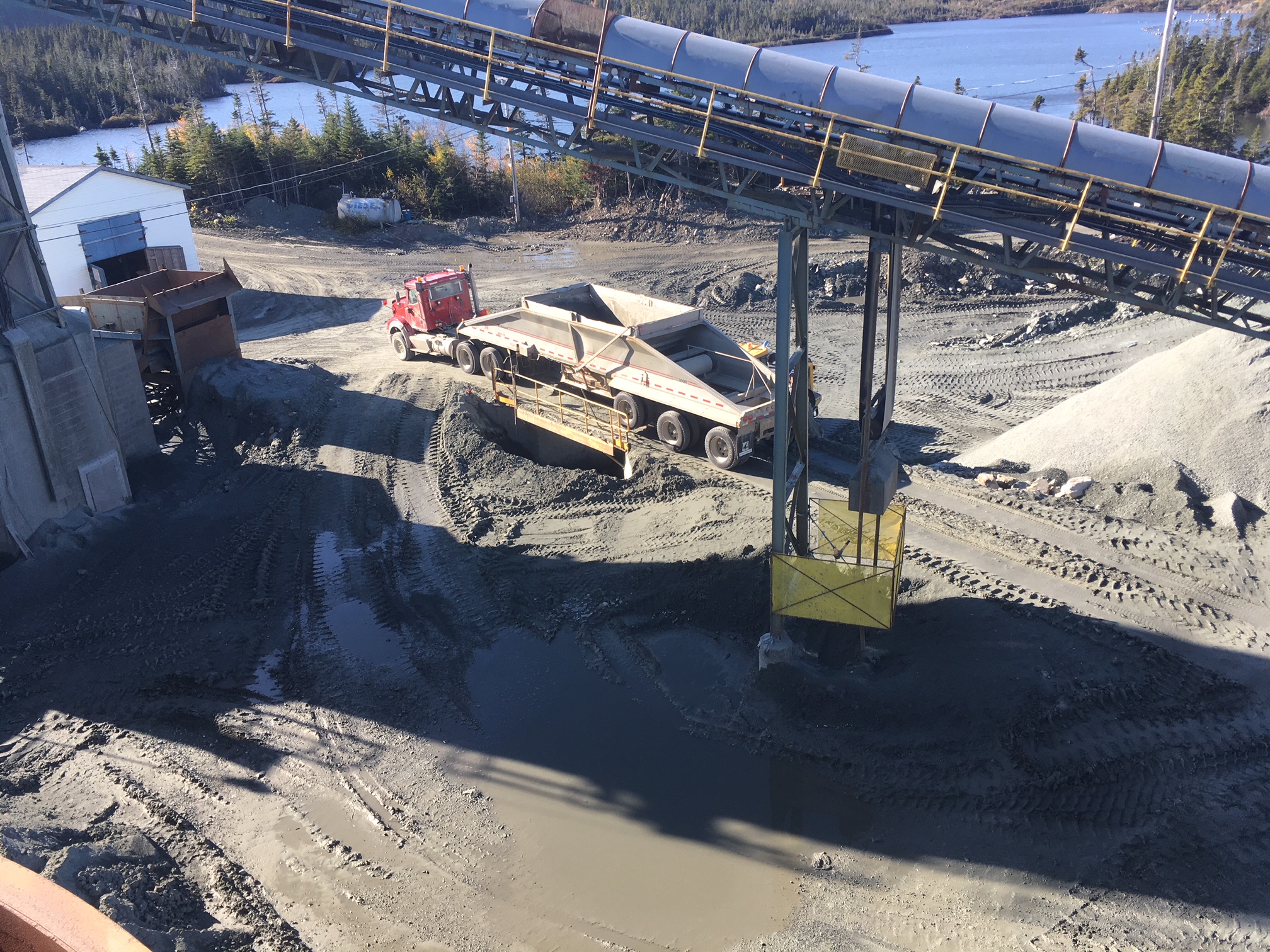
Copper ore being dumped at Nugget Pond

For those who didn’t catch my last newsletter, I have been travelling in Asia, specifically Singapore and Hong Kong. In Singapore, I attended and spoke at Mining Investment Asia and, in Hong Kong, I attend Mines and Money Asia.

The trip was fantastic, I’m eagerly awaiting my next trip to east Asia!

More specifics on my trip in the coming weeks, but for now, some thoughts on the market and what I am buying at the moment.

Enjoy!

Thoughts on the Market

Over the last month, readers have continued to ask me where I think the junior resource market is headed and if I think that the adage, “sell in May and go away,” is the mantra that investors should use in 2019.

Firstly, where do I think the junior resource market is headed? Simply, I don’t know, no one does. The stock market is a complex beast with many factors affecting its direction. However, I know that isn’t necessarily the answer most of you are looking for, so I will add some colour, purely for fun and entertainment.

I continue to believe that gold is a must-have insurance policy, because it appears to me that things are only becoming more complex within the global economy. In my opinion, gold remains the best way to protect your wealth as we head toward major monetary changes in the future.

I will add to this; I view a rising gold price with trepidation because, to me, this is signalling a growing uncertainty within the world, pushing us closer to this major change. I believe you must ask yourself, ‘what does the world look like if the gold price is US$10,000 per ounce?’ My guess is, ‘not good.’

In terms of the base metals, I continue to be long-term bullish on their demand as the human race continues to consume goods at an ever-increasing rate. Further increases in demand, however, don’t necessarily mean that the price of the base metals will go up.

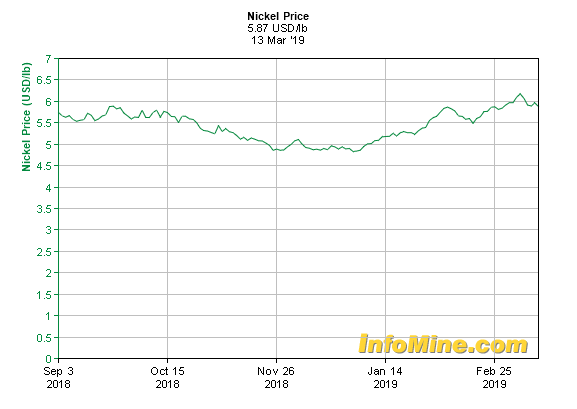
If I were to pick a metal that I believe has a good chance of going up in price, it’s nickel. There are a number of reasons why I believe this could happen and, if you want to hear them, please check out my presentation from this year’s VRIC. If you have more in-depth questions, let me know.

Now, for the junior resource companies; for those who have listened to or read my work previously, you will know that I don’t invest in junior companies because the price of the underlying commodity with which the company is exploring is going higher.

By following a mantra like this, it forces you to stick with the best of the best companies and, thus, protects your downside risk. If your stock picks rely on a rising metal price, I assure you it’s only a matter of time until you lose money, because no one can predict where metal prices are headed with any consistency.

Sell in May and go away? Personally, I don’t put much stock into seasonality type theories like this and stick to fundamental analysis to determine my buys and sells in the market. In the long term, I think the vast majority of investors would be much more successful if they ignored market commentary such as this, as again, who can predict the future with any consistency?

Second to that, while many of the junior resource company share prices have fallen over the last year or so, there are many which have stock charts that reflect a much brighter story. The companies which have bucked the trend in most cases are exploration companies, because discovery pays no matter where you are in the cycle.

Additionally, there are some stories which are run by some very talented management teams, and the cream always rises to the top!

Companies I am Buying

Irving Resources (IRV:CSE)

I mentioned Irving in my tax loss buying / 2018 year in review article in December. Irving is 1 of 2 junior companies exploring for gold in Japan and, at the moment, have the drills turning at their highly prospective Omu Gold Project in Hokkaido.

The stock price has doubled since December as a function of the build up for drill results and with the newly announced strategic financing by Newmont. Additionally, Irving has released pictures of the drill core from their first 2 holes.

Along with the pictures they have provided some explanations of what they are seeing in terms of alteration in the drill core, thus far. Check out their webpage for more details.

Personally, I’m really encouraged by what I have seen, especially the results from hole #2, which appears to have hit the top portion of the boiling zone of this low sulphidation epithermal target.

Is it a buy here? I think it depends on your risk tolerance.  Currently, the MCAP is sitting around $100 million, with a portion of that value being derived by the gold they have in the ground in the form of the past producing underground mine within the Omu property.

Besides that, the valuation, from what I can tell, is solely based on the speculative upside potential in this low sulphidation target they are drilling at Omu which, I think, at this point, is warranted.

I bought more stock around $1.70 when I saw the news release with the core photos because I thought they looked very similar to the Hisikari core photos which I had looked at months ago.

For perspective, Newmont bought in at $2.20 a share, but given the size of Newmont and their outlook for what Omu might mean to them in the future, the entry share price isn’t necessarily their primary concern.

For individual investors, however, it can mean a lot, as a miss on the first drill results and the share price will likely be cut in half, especially in this market. In saying this, I believe Irving will give me multiple kicks at the can, even if these first assays don’t return good results.

For those with a healthy appetite for risk, therefore, the current price really isn’t that bad given what the upside potential may be. I, however, would be more comfortable looking for an entry price below $1.90.

Drill core has to be sent offshore for assay, therefore, we are still 4 to 6 weeks away from results, and with this in mind, there may be a chance of weakness in the share price.

FPX Nickel Corp. (FPX:TSXV)

The best bang for your buck in terms of nickel juniors out there. Current share price is at $0.12, and considering the metallurgical optimization on the project and a fantastic solution to their debt issue, there is deep value here.

Check out my articles and presentations to see why I believe the future is bright for FPX.

https://staging.juniorstockreview.com/2019/03/18/fpx-nickel-corp-update-on-the-baptiste-deposit-metallurgy/
https://staging.juniorstockreview.com/2019/02/08/nickel-a-short-and-long-term-outlook/
https://staging.juniorstockreview.com/2018/01/08/fpx-nickel-corp-undervalued-pure-nickel-play/

Maritime Resources (MAE:TSXV)

I was an investor in Anaconda Mining for a long time and believed that the proposed merger of the 2 companies last year would have been fantastic for both sets of investors. That, however, didn’t happen for a number of reasons.

Today, Maritime is under new management and appears to be progressing in the right direction in terms of moving its Hammerdown project toward production.

Recently, they raised more than $6 million dollars at $0.10 toward the development of Hammerdown, with both infill and exploration drilling in the plans.

In October 2017, I was able to visit Rambler Mining’s Nugget Pond mill, which, in Hammerdown’s PFS, is the site for processing its ore (under a tolling agreement). Having seen Nugget Pond’s gold circuit, I can attest to it not being a turn-key operation. Money will need to be spent to bring the gold processing equipment back up to operational condition.

Personally, and this is complete speculation on my part, I think it’s more likely that we will see another attempt at the merging of Anaconda and Maritime.

Appreciation in the share price of Maritime could be a major catalyst for talks, as a merger of roughly equals may be an easier sell to Maritime shareholders this time around.

I was a buyer at $0.09 and see a lot of expansion potential at Hammerdown, with the added bonus, in my mind, that there could be a strategic merger in the future.

Commander Resources (CMD:TSXV)

In my decision to invest in Maritime, I came across the fact that Commander owns a royalty on Hammerdown, which, in my estimation, is worth a few multiples of Commander’s currently paltry MCAP.  Keep in mind that without Hammerdown going to production, the royalty is worth nothing.

In addition, if you dig further into Commander, you will see that they have equity positions in both Maritime Resource and Aston Bay. Collectively, these positions, last I checked, were worth around $800K.

Last spring, Commander completed a $2.5 million financing, which has been burned down to $1.5 million as of PDAC.

At the moment, therefore, you can almost buy Commander for the value of their cash and equity positions, mix in the potential of the Maritime royalty and your downside potential is minimal, in my opinion.

I was a buyer at $0.095.

Aethon Minerals (AET:TSXV)

Currently, Aethon’s MCAP is roughly around their cash value. With news on the horizon, I think there are good things to come for Aethon.

Concluding Remarks

While the majority of investors might decide that they know where the market is headed and sell in May, I’m happily buying companies that are selling for less than their value, and have catalysts towards price appreciation.

A few good articles are coming your way in the coming weeks, stay tuned!

Until next time,

Brian Leni  P.Eng

Founder – Junior Stock Review

Disclaimer: The following is not an investment recommendation, it is an investment idea. I am not a certified investment professional, nor do I know you and your individual investment needs. Please perform your own due diligence to decide whether this is a company and sector that is best suited for your personal investment criteria. I do own FPX Nickel Corp., Irving Resources, Maritime Resources, Commander Resources, and Aethon Minerals stock. I have NO business relationship with of the companies mentioned in this article.

Posted on

FPX Nickel Corp. – Update on the Baptiste Deposit Metallurgy

FPX Nickel Corp.

What has been the best performing metal in 2019 YTD? Nickel is up roughly 20% from the beginning of the year, which makes it one of the best performing metals, if not the best, thus far. I could write a whole report regarding the fundamentals of nickel and why I’m so bullish, but instead, I’ll direct your attention to my presentation at the Vancouver Resource Investment Conference (VRIC), where I covered the subject in detail.

With global nickel inventories falling rapidly and the nickel price responding positively, I thought it was a great opportunity to give an update on one of my favourite junior resource companies in the sector, FPX Nickel Corp.  

My update is two-fold; first, I want to review the newly released metallurgical test work, and finally, I want to touch on one of my most asked questions regarding FPX, “what’s the deal with the debt?”

Let’s take a look.

Metallurgical Test Work

I’ve been eagerly awaiting FPX’s update on their metallurgical test work which began last summer. For many, the Baptiste deposit’s metallurgy was a big question mark because awaruite isn’t exactly the most common primary nickel mineral being mined these days.

For those who aren’t familiar with awaruite, it’s a dense and highly magnetic nickel-iron alloy, Ni₃Fe, which is commonly referred to as a ‘naturally occurring stainless steel.’

FPX appointed ALS Metallurgy, operating out of Kamloops, BC, with the goal of improving the previous metallurgical results from the 2013 PEA, which demonstrated nickel recoveries of 82%.  

The recovery and concentrate grade assumptions in the 2013 PEA were based on a two-stage process, which consisted of a primary coarse grind to P80 600 microns, followed by a rougher magnetic separation, then a re-grind of that fraction to P80 70 microns, followed by Knelson gravity concentration to produce a concentrate grading 13.5% nickel, 45-50% iron and 1-2% chromium.

While this concentrate would have been a highly marketable product within the nickel market, improvement in recoverable nickel and the subsequent reduction in the amount of gangue present in the concentrate could be very advantageous to Decar’s NPV and, of course, increase the demand for the improved contents of the concentrate.

Testing

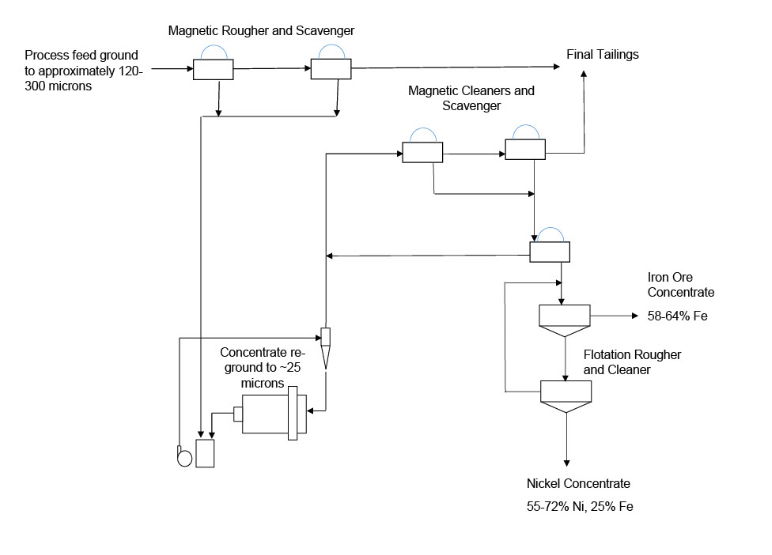
To complete the metallurgical test work, ALS was given 400 kg of core sample reject material from 4 drill holes completed in 2012 and 2017.  The material was then used in a two-phase program, focused on 3 goals: (1) improving nickel recovery, (2) increasing nickel grade in the final product; and (3) producing a saleable iron ore concentrate by-product.

Phase 1 testing provided proof of the recovery of nickel and iron using magnetic separation and the upgrading of these minerals into a bulk Ni-Fe concentrate using re-grinding and magnetic cleaning.

Phase 2 focused on the flotation of the concentrate created in Phase 1, separating the awaruite from magnetite. This process was very successful, as the floatation separated the 2 minerals, recovering 80 to 90% of the nickel and allowed for the creation of a high grade nickel concentrate – 55 to 72% Ni, which compositionally is almost pure awaruite (75% Ni / 25% Fe).

For most nickel companies, the tailings of their final upgrading circuit is waste, or in many cases, where sulphides are present, often leaves them with a potential environmental liability in terms of its acid generating capability.

FPX is in an enviable position, as there are little to no sulphides present in the host rock and tailings and, most advantageous, the flotation tailings appear as though they will be saleable. In FPX’s case, the tailings are actually a magnetite iron ore concentrate, which has a grade range of 58 to 64%, and may be a good candidate for sale to steel mills in the western portion of Canada and the United States.

Saleability of the Magnetite Iron Ore Concentrate?

For those who aren’t familiar, I spent 10 years within the steel manufacturing business.  While my work experience was within the rolling mill, as an engineer and manager, I do have an understanding of the steel making process within a mini-mill.

A mini-mill derives its in-feed primarily from recycled steel products, such as cars. As such, many mills have their own recycling facilities that purchase scrap steel from the public. The scrap is then shredded and brought to the scrap bay, where it is piled with many other types of scrap.

Other potential scrap can include (but is not limited to) busheling, heavy melt, turnings (lathe or mill) or pig iron.

Depending on the grade of steel to be produced and the cost of the various input scrap sources, an algorithm is used to optimize the scrap mixture so that the highest potential profit is achieved. From there, a crane with a huge grapple begins to fill a charge bucket with the correct amounts of the various scrap sources. Not only is the amount of scrap from each source important, but so is the order in which it is placed into the bucket.

Why? The mini-mill process uses an electric arc furnace (EAF) to melt the steel and, therefore, the density of the material which will be charged into the EAF is very important, as the more densely packed the scrap is, the more efficient the application of electrical energy to the steel to melt it.

The reason I’m explaining this is because I think it’s vitality important for judging the likelihood of FPX being able to sell their magnetite iron ore concentrate to a steel mill.

Personally, I think it’s very realistic that there will be a mill that is interested in the product, but it’s going to come down to price and possibly the consistency of the end product.

Firstly, the price question. Further metallurgical analysis should give FPX a better indication of the cost profile of this process and, subsequently, allow them to conduct market research on a possible buyer of both the high-grade nickel concentrate and the magnetite iron ore concentrate.

Secondly, the steel manufacturer may require the powder like magnetite iron ore concentrate to be agglomerated before they can use it.  I’m not sure which would be preferred, but it’s something that I intend to do my own research on with the contacts I still have within the steel business.

FPX’s Debt

Beside the questions I have received regarding the Baptiste deposit metallurgy, questions regarding FPX’s debt is the next most popular. So, what’s the deal with the debt and should I be concerned?

This is a great question and one that certainly deserves contemplation before investing. If you examine FPX’s most current financial statement, you will see under the line item, Loan payable (note 10), there’s an amount for $7,296,794 CAD.

This isn’t a small amount of cash, especially given current market dynamics; however, I think the back story on this loan needs to be discussed.

In 2015, FPX was given the opportunity, by their former joint venture partner Cliffs Natural Resources (NYSE: CLF), to purchase their 60% stake in the Decar nickel project for US$4.75 million. The purchase would give FPX 100% ownership of the property at a cost which, I believe, is a STEAL, especially considering the amount of money (US$22 million) which Cliffs spent developing the property.

It was here that FPX and a large individual shareholder of the company came to an arm’s-length agreement on a loan (details can be found here), which would be used to make the purchase from Cliffs. The term of the loan was 5 years, which makes it due in fall of 2020.

I recently posed the question regarding the debt to FPX’s CEO, Martin Turenne, and here’s what he had to say,

“The debt was initially provided to us on very favourable terms, with a low interest rate, by one of our major shareholders in order to fund the re-acquisition of a 60% interest in Decar from Cliffs. Since advancing this loan to us in 2015, this shareholder has significantly increased their equity position in the company. The shareholder continues to be very supportive of our efforts, and we are working on a plan to deal with the impending maturity of the debt in a way that will be beneficial to all shareholders.”

Situations such as this require some trust as the identity of the large shareholder isn’t known to me and, therefore, I have no way of verifying what Turenne says. However, I do know Turenne and, without a doubt in my mind, believe that what he’s saying is true and, therefore, am not personally concerned with the debt at this point.

 Concluding Remarks

As I’ve mentioned many times before, a bullish outlook on a metal is not a good reason to invest in a junior resource company. Junior resource companies are businesses whose value is primarily driven by the people who run them. Therefore, in my opinion, it’s of the utmost importance that you understand who you’re giving your money to, what their plan is to move the company forward, and if their interests are aligned with the shareholders (i.e. cost of capital in the company).

In terms of nickel, as I mentioned, I’m very bullish and it just so happens that FPX Nickel Corp. fits the bill in terms of price-to-value proposition. The company has a greatt management team that has ticked all the boxes in terms of keeping its promises to shareholders as they progress the company forward, into what looks to be a tremendous nickel bull market on the horizon.

In summary, FPX’s metallurgical test work results are great and should validate any of the concerns from those who were skeptical about the refinement of the Baptiste deposit ore. While the results from the met work are great, in my mind, it does create a few new questions, such as the saleability of the magnetite iron ore concentrate or what is the cost profile for the new process. These, however, are great progressive questions to have, and I personally believe FPX is headed in the right direction.

Finally, for the questions regarding the debt, it’s a valid concern, however, given the background of the debt holder and my trust in Turenne, I’m inclined not to be concerned with it at this point.

I continue to hold FPX and look to increase my position with any weakness in the share price.

Don’t want to miss a new investment idea, interview or financial product review? Become a Junior Stock Review VIP now – it’s FREE!

Until next time,

Brian Leni  P.Eng

Founder – Junior Stock Review

Disclaimer: The following is not an investment recommendation, it is an investment idea. I am not a certified investment professional, nor do I know you and your individual investment needs. Please perform your own due diligence to decide whether this is a company and sector that is best suited for your personal investment criteria. I do own FPX Nickel Corp. stock. I have NO business relationship with FPX Nickel Corp.

Posted on

Fremont Gold Site Visit – Gold Bar Project in Nevada

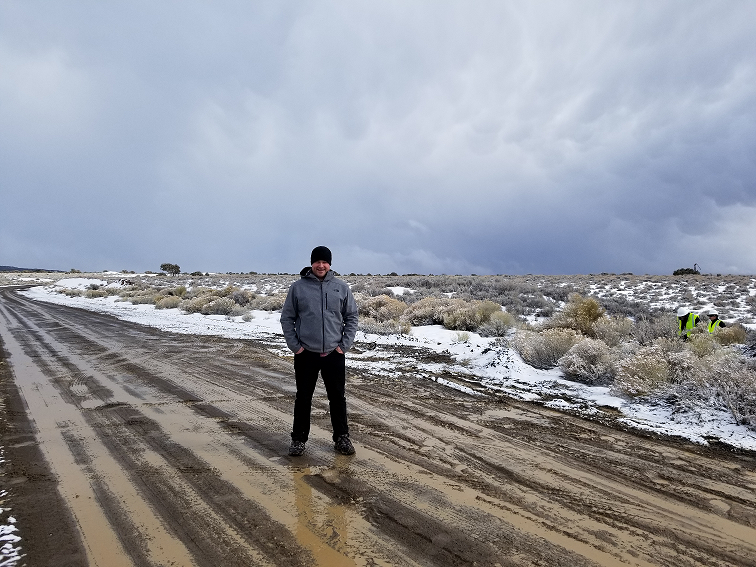
Brian Leni Gold Bar Project

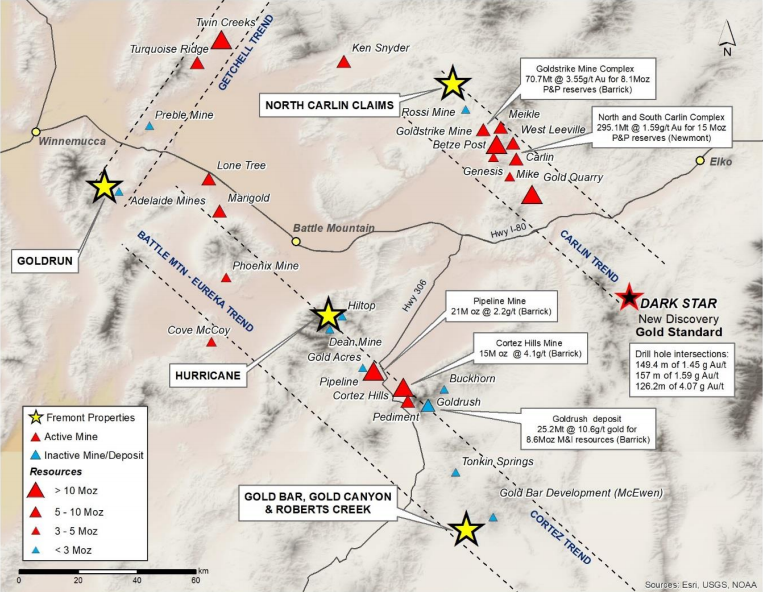
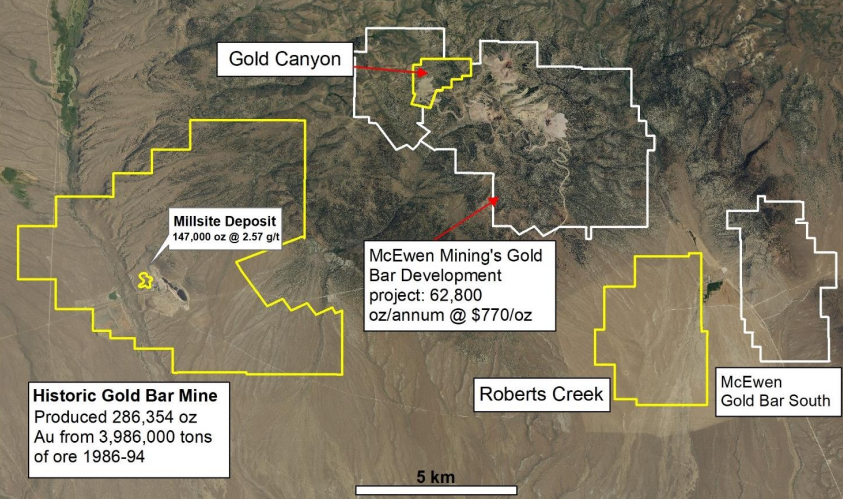
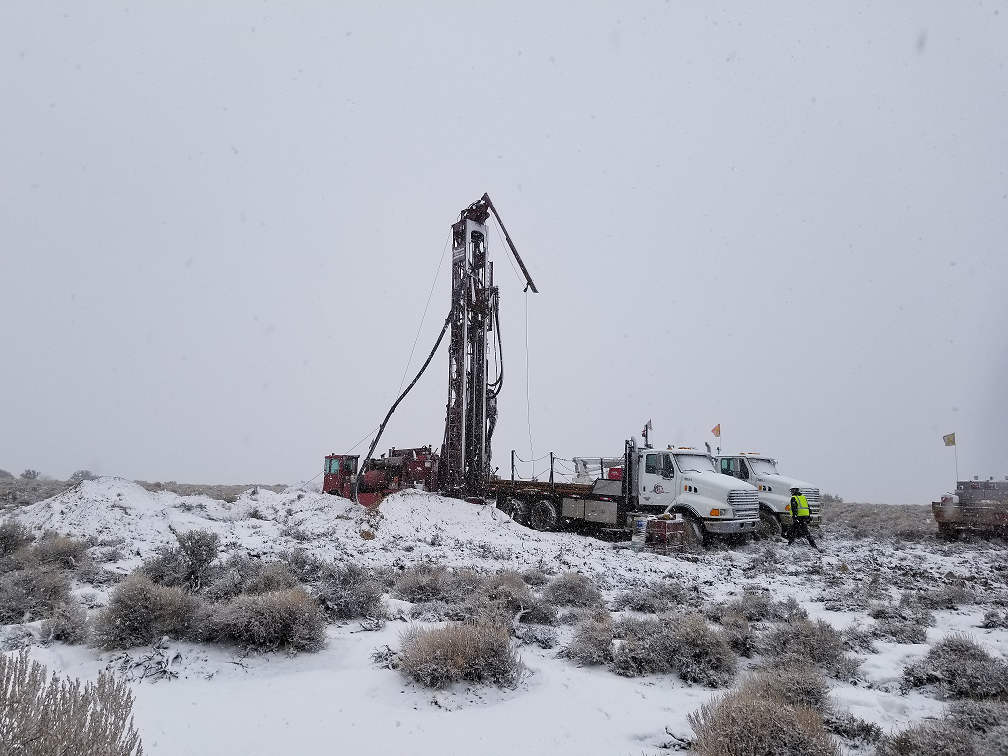
A couple of weeks ago, I had the opportunity to visit Fremont Gold’s Gold Bar Project in Nevada. The Gold Bar Project is located within Eureka County, which is home to the famous Battle Mountain-Eureka-Cortez gold trend, and lies in close proximity to McEwen Mining’s Gold Bar mine.

I’ve put together a few of my notes from the trip and a little colour on Nevada’s history.

Nevada: A Premier Jurisdiction for Mining

Nevada is situated in the western United States and has a long history of mining dating back to the 1840s. Although mining began over 150 years ago, Nevada’s real fame in the gold mining industry didn’t come until the 1960s when ‘Carlin Style’ or sediment-hosted disseminated gold deposits started being mined.

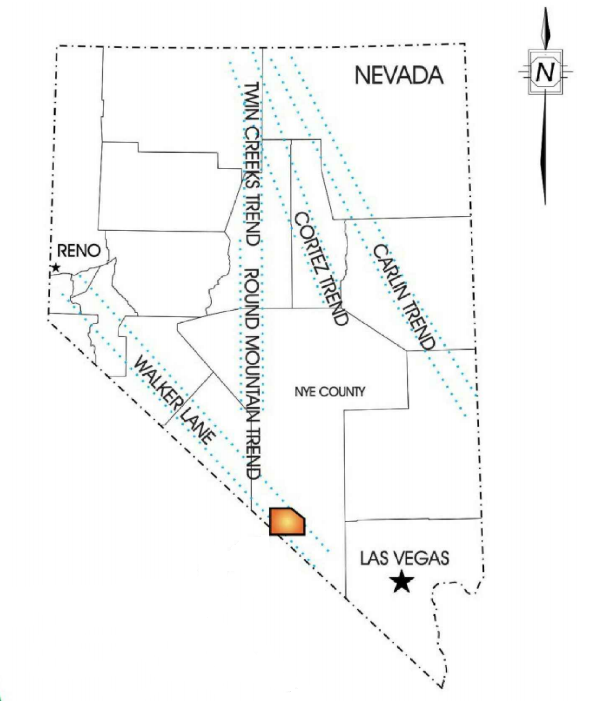
Nevada Map

Why did Carlin Style gold deposits take so long to be mined? Simply, nobody saw them. Unlike the outcropping gold bearing epithermal veins that were discovered by early prospectors, Carlin Style gold is very fine grained and not visible to the naked eye.  Since the 1960s, Nevada has produced around 20 million ounces of gold, making it truly a world-class destination for gold mining.

Small Lessons Learned on Site Visits

In my opinion, one of the best parts of doing a site visit is the unexpected things you learn during the trip. These things can vary from learning about the summer housing issues in Dawson City, Yukon, or the Swedish influence on Millertown, Newfoundland.

While some of these ‘lessons’ might not seem like they have much value or significance, I, personally, view them as priceless. The fact is, I’m not sure I would have come across these tidbits of information if I hadn’t made the trip.

The reason they are important has less to do with the actual company and more to do with the culture of the jurisdiction in which the company operates. Taking in information like this prompts more questions and, with more questions, comes deeper thinking and, in my opinion, a fuller understanding of what and where exactly you are putting your money.

Basque Culture

On my latest site visit to Fremont Gold’s Gold Bar Project, there was one tidbit of information that I ignorantly stumbled upon, oddly, by asking, “what is Basque food?”

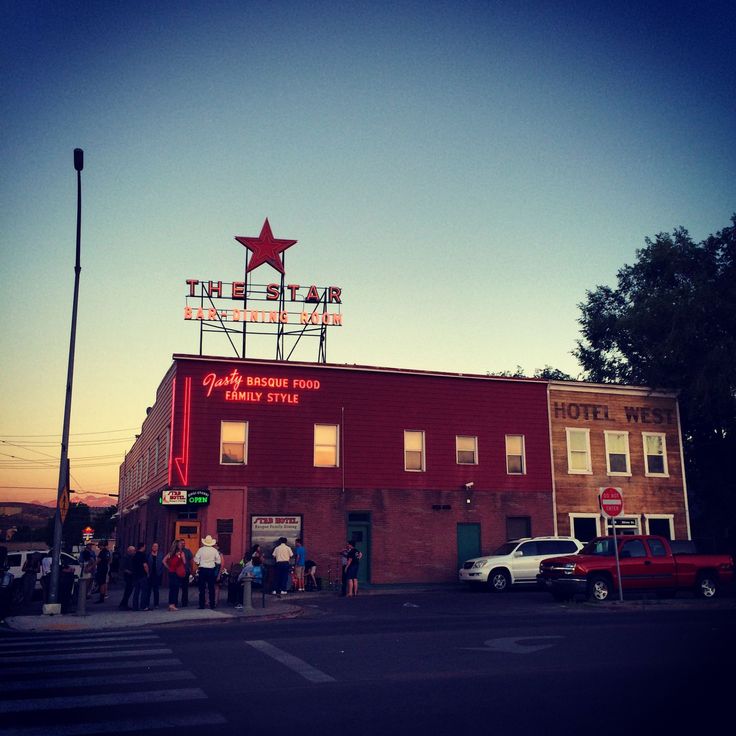
Star Hotel in Elko, Nevada

After visiting the Gold Bar Project during the day, we headed back to Elko and specifically to the Star Hotel for what was referred to as ‘Basque style’ dining. While I’ve travelled to a large number of European countries, they’ve been predominantly in the eastern part of the continent and I, therefore, knew nothing about the Basque region, which is located along the border of Spain and France.

Officially, the Basque region is comprised of 7 provinces; 4 in Spain and 3 in France.

So, the obvious question is how did a region located in western Europe influence Nevada, a state located in the western United States?

I was very surprised to learn that the roots of Basque influence in Nevada are rooted in the mid 1800s, specifically with the California Gold Rush. The allure of gold and the riches which could follow drew in people from all over the world and, in the process, resulted in many of the gold seekers setting down roots in the regions in which they were searching.

For the Basque people, they recognized the potential for raising sheep in California and started setting up their operations. Fast-forwarding to the 1870s and this became a popular vocation for many of the Basque people, and with the crowding in California, many made the move into Nevada.

What’s my point? Personally, I’m always interested in getting a better understanding of the cultural influences within a jurisdiction. In my mind, without a doubt, Basque culture has had an effect on Nevada and the people who reside there.

From the moment you walk into the Elko airport, you know you’re in a mining town. Now, the Basque influence isn’t necessarily direct for mining, but more the entrepreneurial spirit that the immigrants brought with them; they came chasing gold and stayed to farm.

In my opinion, the future of mining is very bright in Nevada and this is only enhanced by a local population which embraces it and looks to grow with it.

NOTE: An interesting fact regarding Nevada politics; former Nevada Governor and U.S. senator Paul Laxalt was the son of Basque immigrants. Laxalt came from humble beginnings in Reno, Nevada where he assisted his parents in the operation of their restaurant/hotel. Also, Laxalt is known for his close relationship with former U.S. President, Ronald Regan.

Fremont’s Gold Bar Project

Fremont Gold (FRE:TSXV)

MCAP – $7.49 million (at the time of writing)

Shares – 53.0 million

FD – 67.2 million

NOTE – Leading the site visit was CEO, Blaine Monaghan; President, Dennis Moore; and VP Exploration, Clay Newton.

Fremont has a number of gold exploration projects throughout the Battle Mountain-Eureka-Cortez and Carlin trends. Gold Bar, however, is particularly interesting given its production history and its proximity to McEwen Mining’s Gold Bar Mine.

Also, it should be mentioned that Fremont owns the Gold Canyon project, a claim block which directly borders McEwen’s Gold Bar Mine. Although we were in close proximity during the site visit, we were unable to get up there due to weather (snow drifts), and access is a little complicated given the fact that you must enter through McEwen’s active mine site.

During our visit, Fremont had just started a 1,000m RC drill program on the Gold Bar Project, where they are targeting a possible extension of the previously producing Gold Bar mine. Key to this drill program is the involvement of long-time Nevada geologist, Clay Newton, who has interpreted data collected on the property to theorize that a possible extension of the gold bar pit sits to the southeast, or offset. This contrasts the prior owners’ premise, which was to test for extensions in-line with the existing deposit – they came up empty handed.

I’m interested to see the results of the RC program, which has recently been completed and samples sent to the lab for assay.

It’s clear that any discovery here or at Gold Canyon could be very tempting for McEwen Mining to acquire. In this case, proximity or ‘close-ology’ makes a lot of sense; the key being that Fremont does discover an extension and, secondly, adds enough value that it’s recognized and desired by McEwen to purchase in the short term.

One final note, Fremont had planned on a 500 m diamond core drill program at Gold Canyon to follow the 1,000 m RC meters at Gold Bar. These plans, however, have been put on hold due to extreme weather conditions in northern Nevada. The company will reschedule in the weeks to come.

Concluding Remarks

Fremont has an experienced management team with a great track record in gold exploration, and it’s my thinking that this will continue as they progress with their portfolio of Nevada based projects in 2019.

The day I spent on site was very insightful and I’ve learned a great deal more about the company and its management team.

I believe Fremont Gold is a company to watch as we move into a gold bull market, and it may be a company that fits your investment criteria. If you’re in Toronto for PDAC or the Metals Investor Forum, be sure to check them out.

Don’t want to miss a new investment idea, interview or financial product review? Become a Junior Stock Review VIP now – it’s FREE!

Until next time,

Brian Leni  P.Eng

Founder – Junior Stock Review

Disclaimer: The following is not an investment recommendation, it is an investment idea. I am not a certified investment professional, nor do I know you and your individual investment needs. Please perform your own due diligence to decide whether this is a company and sector that is best suited for your personal investment criteria. I do not own Fremont Gold stock. I have NO business relationship with Fremont Gold, however, Fremont did pay for my travel and expenses to conduct the site visit.

Posted on

Nickel: A Short and Long-Term Outlook

Vancouver Resource Investment Conference

2019 Vancouver Resource Investment Conference (VRIC)

Produced by Cambridge House International

My presentation, Nickel: A Short and Long-Term Outlook, covers all the major topics affecting the nickel market in 2019 and beyond.

Topics include:

  • Stainless Steel Demand now and in the future
  • Global nickel inventories and where they are headed in 2019
  • Electric Vehicle Market and its affect on the global nickel market
  • Interest rates and U.S. / China Trade War
  • Announcement of Tsingshan’s construction of a $700 million, 50,000 tonne/year HPAL plant in Indonesia by the end of 2019

All views are my opinion and are not investment advice!

Don’t want to miss a new investment idea, interview or financial product review? Become a Junior Stock Review VIP now – it’s FREE!

Enjoy!

Brian Leni P.Eng

Founder – Junior Stock Review

Disclaimer: The following is not an investment recommendation, it is an investment idea. I am not a certified investment professional, nor do I know you and your individual investment needs. Please perform your own due diligence to decide whether this is a company and sector that is best suited for your personal investment criteria. I do own shares of FPX Nickel Corporation. I have NO business relationship with FPX Nickel Corporation.

Posted on

Junior Stock Review Nickel Panel

Vancouver Resource Investment Conference

2019 Vancouver Resource Investment Conference (VRIC)

Produced by Cambridge House International

Junior Stock Review Nickel Panel featuring FPX Nickel’s CEO Martin Turenne, Giga Metal’s CEO Mark Jarvis and RNC Minerals Director of Investor Relations Rob Buchanan

Nickel panel discusses the bullish and bearish factors affecting the nickel market in 2019 and beyond. Topics include:

  • Factors which affected the nickel in 2018
  • Global nickel inventories and where they are headed in 2019
  • Announcement of Tsingshan’s construction of a $700 million, 50,000 tonne/year HPAL plant in Indonesia by the end of 2019
  • Stainless Steel Demand now and in the future
  • Outlook for the nickel price in 2019

Don’t want to miss a new investment idea, interview or financial product review? Become a Junior Stock Review VIP now – it’s FREE!

Enjoy!

Brian Leni P.Eng

Founder – Junior Stock Review

Posted on

2019 VRIC and a Few Thoughts for 2019

Vancouver Convention Center

Vancouver Resource Investment Conference 2019

Those who read my work on a regular basis know that I’m bullish on nickel. I first began researching the sector in 2017 and have felt that there are many reasons to be bullish, ever since. In 2017, the nickel price followed my thesis with very strong price performance. 2018, however, was very different, as we saw the nickel price take a step back.

Although there are a few hurdles that must be overcome in the short term, I’m more bullish than ever on nickel.

Find out why at the upcoming Vancouver Resource Investment Conference (VRIC) on January 20th and 21st., where I will be giving a presentation – Nickel: A Short and Long-Term Outlook.

In addition to my overview of the nickel market, I will be providing the audience with a few of my best picks for 2019. Hope to see you there!

Presentation – Nickel: A Short and Long-Term Outlook – 2:20pm in Workshop #4

Panel – Nickel Panel: Moderator – Brian Leni, Companies: FPX Nickel, Giga Metals and RNC Minerals – 11:40pm in Workshop #4

2018 Tax Loss Season

As expected, tax loss season saw many junior resource company share prices fall. Tax loss season, however, went into overdrive after the Federal Reserve’s (Fed) announcement on December 19th, which brought news of a further rate hike.

This was exactly the opportunity I was looking for, as the announcement clearly did not sit well with the market. Not surprisingly, companies with heavy association with base metals took it on the chin the worst, and provided me with an opening tranche in Champion Iron Ore (CIA:TSX) and the opportunity to buy more of Labrador Iron Ore Royalty (LIF:TSX) and Altius Minerals (ALS:TSX).

In my opinion, each of these companies sits at the top of their respective sectors in terms of management and their overall business. Regardless of what the market thinks, I’m a buyer of the best of the best and have a long-term outlook for these well-run businesses.

On the other side of the coin, one company which I thought was going to have a tough tax loss season, FPX Nickel Corp. (FPX:TSXV), performed exceptionally well and actually gained ground in terms of the share price during what was a selling filled December.

FPX shares are clearly in capable hands, people who understand the underlying fundamentals of the company, and considering there’s impactful news to be released regarding metallurgical work in Q1, 2019 is shaping up to be a good year for FPX owners.

2019 – The Year Ahead

2018 was worse than I expected. So what’s in store for 2019?

My guess is that we are headed for some major volatility in the broader market as anticipation of a Fed rate hike in March nears. For the gold market, this is probably a good thing, because when doubt prevails in the broader market and investors are trying to mitigate risk, gold has been one of the pillars of safety.

How does the volatility affect the base metals? This is a great question, one which I have been asking myself. While I believe the volatility will be primarily driven by the interest rate decision, I believe the key to strength in base metals prices is probably more linked to the U.S. and China trade war.

A resolution to the trade war could be the catalyst which brings to light the global supply issues that many of the major base metals appear to have.

I must again reiterate that predicting the future is hard to do with any consistency, and for investment in the junior resource companies, it provides little value. Junior resource companies are speculations on management’s ability to execute on a plan, not because gold is going to $2,000 per ounce – although, it would certainly help!

Being picky at the bottom or near the bottom will help ease the emotional effects of a volatile market and, most importantly, put you in the best possible position for success in the future.

Don’t want to miss a new investment idea, interview or financial product review? Become a Junior Stock Review VIP now – it’s FREE!

Until next time,

Brian Leni  P.Eng

Founder – Junior Stock Review

Disclaimer: The following is not an investment recommendation, it is an investment idea. I am not a certified investment professional, nor do I know you and your individual investment needs. Please perform your own due diligence to decide whether this is a company and sector that is best suited for your personal investment criteria.

Posted on

A Conversation with Chad Wells, VP Corporate Development of Altius Minerals

Chad Wells Altius Minerals

Everyone has different reasons for investing or speculating in the resource sector. I believe, for the majority of the participants, it’s the allure of 10 baggers that attract them to the juniors.

While the appeal to windfall profits is attractive to almost anyone, I believe it’s exactly this mindset that keeps many investors from actually realizing the gains they are given in the market.

Too many times, I have spoken to fellow investors who haven’t taken money off the table when it’s there, and are left holding the bag until the market turns or the company successfully answers the next unanswered question.

First, if you are an investor who can stomach the ebb and flow of the market then taking a long-term position in juniors can work. Secondly, and key to the first point, it can only work if you are right about the junior company in which you are invested. Will they continue to get ‘yes’ answers as they pursue the development of their mineral deposit?

The juniors draw much of the attention in the resource market, however, I think that there are larger companies that have big upside potential, pay a dividend, and are actual investment-grade companies.

Let’s take a look at one of them!


Altius Minerals Corporation

I’m very bullish on both precious and base metals moving forward. However, the pragmatist in me is especially drawn to the base metals, as their value proposition in today’s society is so easily understood.

Today, I have for you an interview with Chad Wells, VP of Corporate Development of Altius Minerals Corporation (ALS:TSX). Altius is the sector’s only diversified base metal royalty and project generation company.

Currently, Altius has 15 producing royalties in copper, zinc, nickel, potash, iron, thermal and metallurgical coal. In addition, the project generation side of their business has drastically grown in overall equity value since 2016, moving from roughly $22 million to $68 million at September 30.

There  are 54 new projects since Q1 2016 within Altius’ project generator portfolio and these will not only be the source of cash through equity sales in the future, but more importantly, will be the source of new cash flow by way of the royalties that are associated with most of the projects in their portfolio.

In my opinion, Altius is the best example of intellectual capital and how people are, by far, the most important commodity in any business.

As Wells mentions in our conversation,

“We’re a group that sticks to our guns, and believes in our own reasoning and rationale. At the end of the day, it’s about relying upon your own technical expertise and surrounding yourself with the right people that are willing to give you the right opinion that is unbiased, genuine and legit.”

I have long been an Altius shareholder and, in my opinion, would say that if I could only own one company in the sector, it would be Altius Minerals, hands down.


Altius Minerals (ALS:TSX)


MCAP – $556 M (at the time of writing)

Shares – 43.0 million

Annual Dividend – $0.16 / share

Outstanding Debt – $120 million

Cash and Public Equity Holdings – $180 million ($33.8 million cash)

2018 Royalty Revenue Guidance – $64M to $69M


Brian: In my conversation with Brian (referring to CEO Brian Dalton) last November, he was super bullish on iron ore and, over the course of the year, Altius has taken big steps to capitalize on the iron ore market.  First in March, by increasing your position in Alderon Iron Ore and, most recently in Q3, increasing your position in Labrador Iron Ore Royalty Corporation.

Can you please explain the opportunity you see in the iron ore market?

Chad: We’ve been a mainstay player in the Labrador Trough since 2004 and 2005. Originally, it was from an exploration perspective where we generated projects and sold them on to third parties. Alderon Iron Ore was created during that time, as a part of that strategy, and lead to us becoming very intimate with the iron markets. The Labrador Trough iron ore fits a niche portion of the global marketplace.

Brian (referring to Altius CEO Brian Dalton) has an innate ability to see around corners so he’s been predicting a bifurcation happening in the broader iron ore market this past few years for high grade iron ore with low impurities, compared to the lower grade, higher impurity stock coming out of the Pilbara. A lot of it’s being driven by Chinese pollution standards and emissions targets  through their steel mills. You’ve seen the Chinese cut significant volumes of steel production last year because mills were burning lower purity met coal and iron ore.

That’s led to a premium for the high grade, low impurity products. While the quoted price for iron ore, let’s say is at $70 per ton, the high grade Trough products are getting better than $100 per ton, while low grade is trading at a discount.

Brian recognized the separation that was coming in the market between high and low grade long before the broader market did. For us, it spawned an investment thesis to buy a substantial share position in Labrador Iron Ore Royalty Company (LIORC) mainly accumulated with the Fairfax preferred money starting in early 2017. LIORC has a 7% gross revenue royalty on Iron Ore Company of Canada’s  (IOC) Carol Lake operations, as well as a 15% equity stake. LIORC is a passive type issuer, taking the money that they get from the royalty and then dividending most of it straight to shareholders.

For us it was the opportunity to have exposure to a royalty on a premier iron asset in Labrador, at a time when we thought the market was going to start to take recognition of that.

Over the last year, we increased our Labrador Iron Ore Royalty Corporation holdings substantially. If you look at our average price, which was around  $17 a share before we bought the most recent addition of another .4%, LIORC stock traded last week as high as $31. At the same time, the yield of the dividends that we’ve realized off the asset are quite pronounced. And of course, we treat it as royalty income, effectively, in our per annum royalty revenue. So it fills out some of that diversified commodity exposure. So it’s been really good.

Alderon was much more strategic. We were a founder, having discovered the underlying Kami deposit way back in 2005-06.  Our recent doubling up, if you will, on Alderon, goes back to this bifurcation in the iron ore market thesis, which we believe is a real thing and that’s going to last.  It’s also worth mentioning that we bought the additional $5 million stake from Liberty when we agreed to a friendly transaction buying out the balance of the potash royalties that we’d held together in a JV.

With that comes the reality that you’re playing Carol Lake, through LIORC. Also, we have a convertible debenture with Champion Iron. Champion is the company that bought the Bloom Lake assets for $10 million in cash plus assumed liabilities of around $43 million from Cliffs, who had sunk nearly US$3 billion of capital into the project during the last iron bull.

The way we see things playing out in the Trough, we believe IOC brings a lot of transparency and reality to the broader marketplace, of the niche, that Labrador iron fits. We think that spills over into Champion, which is a very high margin operation right now, but is flying under the radar. We think the market will take credence and recognition there.

And as this market continues to want more high grade, low impurity iron ore, the next shovel ready project in that district is Kami. For us to buy that stake, on favourable terms, in Alderon from Liberty, brings us back to being that major shareholder with a big stick , it makes a lot of sense for us strategically.

If you reflect back to the last cycle, it was the asset that would have tore the lid off the can for Altius as a royalty generative business. The thing that most of the marketplace doesn’t realize today is that Altius is a different type of royalty company. It’s not a Franco or a Wheaton, who grows through acquisition. We actually grow our royalty portfolio organically and Alderon is one example of that.

In the past bull market in iron, around 2011, when we thought that Kami was going to get built, Alderon raised a bunch of money with the Chinese partner, Hebei Group. It almost got through the window in the sense of raising the capital to build a new mine. If that had to have happened, not only would we made a couple hundred million on the equity, but we would have had an underlying royalty on that asset at 3% gross royalty that based on the feasibility numbers of the assessment at the time, it would have generated about $25 million per year of royalty revenue for Altius for 20+ years.  The reason it didn’t happen is because the iron ore bull market ended so quickly when prices dropped from around $130 per tonne to levels less than half that.  If you add the premiums to the current spot, we’re edging closer to $100+ again.

Alderon is an extraordinary opportunity of optionality and because of what’s happened in the bigger iron ore market and because of the strategic significance of Labrador iron product in general, I think it happens this cycle.

Kami still needs a billion dollars in capital to get it done, but consider what’s going on with Rio Tinto and IOC and the rumors of them IPO-ing their IOC stake, and, again, the success of Champion in restarting Bloom, and it seems a reasonable bet that Alderon will raise the capital this time around. It might get built.  If it does, it will differentiate Altius from all of the others because the net asset value just from the royalty aspect that gets created from nothing, is profound.


Brian: That leads into my next question, generally speaking, in your opinion, how difficult is it to raise $1 billion to develop a mine, today?

Chad: Very difficult and, in saying that, today’s market is probably not the one to do it in. Will that market come? Of course it will. One thing that’s going to be very apparent in what I’ll call the pending bull cycle in commodities, is that the story is going to be about supply this time around, not demand.

What we’ve seen happen is the world has not developed enough copper, nickel and high grade iron ore mines to sustain just the static needs of society. So ultimately, it’s going to be a supply crunch and there’s just not going to be enough supply out there.

So that will incentivize commodity pricing, and incentivize capital, and more mines will get built. So will it happen? It will. The Iron ore business is a bit different, because there is a lot of iron ore that came on through the last cycle through investment. But most of it is in this low grade or medium grade stuff. So it doesn’t have the strategic niche of this high grade, low impurity ore, which quite frankly, the Chinese need.

So is the capital there today? Probably not. Will it come? It will. Also, I’d say you don’t necessarily have to think that these things are going to be built by the market. There’s a lot of diversified miners out there that have good balance sheets, have made a lot of money here in the last few years, again, and are going to be looking for shovel-ready assets to acquire to develop themselves.  Maybe some of these things get built in different ways, not necessarily going to be through the capital market conventions of a bull market, if you will.


Brian: Earlier this year, Altius entered the lithium market with the investment in a closed end limited partnership with Lithium Royalties Corporation. The deal gives Altius the rights to buy up to 10% of selected royalty direct investments.

Generally speaking, what criteria is Altius looking for in terms of the ideal investment in the lithium space? For example, does the lithium deposit type or jurisdiction matter?

Chad: We’ve always been a group that has focused on exploration and investment in bread and butter commodities, which lithium would not fit. We’ve seen a lot of these specialty themes over the years and we haven’t invested in them because their supply and demand fundamentals have been so wonky that we just weren’t comfortable with the volatility.

In the case of lithium and the battery metal craze in general, I’d say we missed it with lithium. We didn’t necessarily believe that it was going to be one of these bread and butter commodities. I think we’ve come to realize that it is something that we should have spent more time investing in earlier through our exploration business, but we didn’t. Because regardless of how much we try to minimize the forecasts of different battery chemistries in the EV build-out scenario, you just can’t ignore lithium. And the big correction in the pricing this year gives us a more comfortable entry point to be buying when prices are not so near the top. o it is a bit of a catch up game.

What we did do this year is we partnered with expertise. The guys at Lithium Royalty Corp., especially Ernie Ortiz, the CEO of that ship, he’s a specialist in the lithium world. He’s been an authority in lithium for many years starting as one of the first sell side analysts to take apart the EV forecasts as the story was unfolding for the future demand of lithium.

So, again, what Altius decided, in this case, is to partner with some really smart people who had the groundwork laid and had the best-in-class assets sized up and deals templated. We are investing basically side by side with them through an equity position into that company and our royalty co-vestment rights are pro rata with our equity ownership.  But we can pick and choose which ones we actually fund – we don’t have to participate in every one of them, and in fact, haven’t participated in every one so far.It is a different way for us to do it, as typically we’ve always been the front men running our own ship, whether it’s a particular jurisdiction or a particular commodity or a particular idea. In this case, we weren’t the first men running, so we partnered with the first man running.


Brian: Warren Buffett is famous for saying, “You must learn from mistakes, but they don’t have to be your own.” I was wondering if you could parlay that into the 20-year history of Altius.

Are there any lessons in particular that stand out to you?

Chad: Absolutely. It’s all lessons. I’ll focus on my side of the business, exploration and project generation. In the last bull cycle, we made $200 million plus through our project generation efforts. How did we do that?

We took geological real estate that we had generated with boot and hammer prospecting and came up with big context and big ideas. Then, we effectively sold it on to a third party. In the case of where we made the money selling on to a third party, it was a market participant. What we did is we exchanged geological real estate which is generally illiquid for shares in a fairly liquid company on a stock exchange, versus up until that point in time, let’s say the first 10 years of Altius, we spent a lot of our time doing exploration deals with major miners.

Though that gave us a lot of technical credibility in the product that we generated and we were able to attract those third party endorsements, it was an illiquid business. What I mean is that even though you did a deal, you weren’t able to monetize your minority residual stake in the assets.

So the big learning experiment that we had when we look back at the last bull cycle is related to the way that we made money, it was actually trading geological real estate for shares. So when we enter this bull cycle, I don’t know that I’d call it a bull cycle yet, the phone started to ring. All of a sudden, here we were as an exploration group, we had assembled projects in nine jurisdictions globally from 2012 to 2016, when nobody gave a crap about the mining resources business, and certainly weren’t doing exploration. We were able to waltz into world-class jurisdictions, build meaningful land positions, generated a lot of geological real estate, and basically we sat on it and waited for the market to turn.

Since that time, we’ve sold 54 (working on 57!) projects and 17 different agreements in less than 24 months. It’s been extraordinary. I didn’t think it could get so good for us. Every deal we’ve done, except for one that we haven’t announced yet, is that we took our geological real estate, we’d trade it for shares in a third party junior company, or in special circumstances, we even facilitated the IPO of new entities.

Where at the same time, though, where did we end up? We ended up with a big share position in a company that now held the assets that we generated, while at the same time we retained blanket royalties to the underlying projects. Long term sewed up in terms of the mining operations, we get kicked back on our royalties, while at the same time, we’re so early into the cycle we’re effectively getting seed stock in juniors that go to explore our projects.

So these positions expose us to discovery opportunity off of our balance sheet, on somebody else’s balance sheet, at the seed level. It’s beautiful! So if you look at our juniors portfolio today, we’re sitting on 27 juniors with a value of about $65 million at the end of September.

I can’t make a promise, but I’ll say to you I have extraordinary belief that that $65 million will be worth the market capitalization value of the entirety of Altius, roughly $600 million, through the cycle.

We’re seeded up on the right deals, at the right time, in the right commodities and right projects that those things are going to deliver value.

It’s a cyclical business, you need to be able to, to some degree, trade those cycles. We’ve been able to create fundamentally long-term royalties that punch through the cycles, that we can realize on over 10, 20, 30 year increments. At the same time, we’re getting seeded up on equity that we can monetize and put a big surplus of cash into the bank, so when the market rolls over again, we can put it to work.

So, really, it was about realizing it’s all about liquidity and timing.


Brian: That’s a great answer.

The ramifications of confirmation bias should be a major concern for all investors, as human nature dictates that we love to reaffirm our beliefs with confirming evidence. As a manager, the same concern can be said for “yes” men; people who continually support the boss regardless of whether they think they are right.

Personally, in my career as a manager in steel manufacturing, I quickly learned how important it was to surround myself with people who weren’t afraid to tell me what they thought about the projects that were being proposed or the direction that I wanted to take.

In your experience, how important is it to find or listen to disconfirming information?

Chad: The resources sector more than in any other, you shouldn’t run with the herd. You have to go against it.  The reality is that this business in general – exploring, mine development, mine construction, mine production – is extremely tough and tedious.

Additionally, you’ve got to realize that there’s a lot of different tiers and categories of humans that benefit from a story advancing versus not advancing. So, a lot of times, you’re always encouraged to keep spending and spending and spending, because to some degree it’s the mentality to keep things going.

We don’t get into that type of philosophy. We’re a group that sticks to our guns, and believes in our own reasoning and rational. At the end of the day, it’s about relying upon your own technical expertise and surrounding yourself with the right people that are willing to give you the right opinion that is unbiased, genuine and legit.

The resource sector is like no other, it is feast or famine, it’s a herd mentality. To succeed you have to genuinely and truly be a contrarian.  You have to be a no man versus a yes man.


Concluding Remarks

Altius Minerals is the cornerstone of my personal portfolio and will remain that way for the foreseeable future. In Altius, I see minimal downside risk outside of a broader market crash, which, in reality, would negatively affect just about every company’s share price.

Further, the upside potential from their project generation business looks very promising. First, looking at their development stage royalties projects: Excelsior Mining’s Gunnison copper project, Alderon Iron Ore’s Kami project or Evrim’s Cuale project, there is a lot of potential cash flow that could be soon flowing in Altius’ direction.

On the exploration side of their equity portfolio, you have Adventus Zinc Corporation (ADZN:TSXV), Aethon Minerals (AET:TSXV), Antler Gold (ANTL:TSXV), and Sokomon Iron (SIC:TSXV) to name just a few. Additionally, you have their latest spin out, Adia Resources, which is partnered with De Beers in the exploration for diamonds in Manitoba.

There are no guarantees in life, however, I believe that if you look at the short and long-term prospects of Altius, I think you will agree that they look tremendously bright.


Don’t want to miss a new investment idea, interview or financial product review? Become a Junior Stock Review VIP now – it’s FREE!


Until next time,


Brian Leni  P.Eng

Founder – Junior Stock Review


Disclaimer: The following is not an investment recommendation, it is an investment idea. I am not a certified investment professional, nor do I know you and your individual investment needs. Please perform your own due diligence to decide whether this is a company and sector that is best suited for your personal investment criteria. I do own shares in Altius Minerals, Adventus Zinc Corporation, Aethon Minerals, and LIORC. All Altius Minerals analytics were taken from their website and press releases.  I have NO business relationship with Altius Minerals or any of the other companies mentioned in this article.