Posted on

Euro Pacific Bank Review

Euro Pacific Bank

Is International Diversification for You?

International diversification is an interesting subject, mostly because it doesn’t mean much to the majority of the population. Most people are very comfortable living their lives entirely in one jurisdiction. Take the United States, as an example, where only 39% of the population actually holds a passport. Needless to say, the vast majority of Americans are comfortable sticking within the borders of their own country. There’s nothing wrong with this, but generally speaking, you should keep in mind that you’re completely vulnerable to the whims of the voting majority and its elected government.

As the demographics change and a new generation becomes the voting majority, countries will change. For the most part, this will be a good thing, but for a select few, it can have devastating outcomes. You need to look at the country in which you live quite closely, and ask yourself these questions: How are the demographics changing? How do I fit in with the new majority? Am I okay with their new direction? These are questions that should be asked multiple times throughout your life, because as your needs change, others’ needs are changing, too. How will that affect you?

Before getting to the review, I’ll leave you with some wise words from one of the world’s most successful International Men, Doug Casey:

“The day is coming when your local government may stop seeing you as a milk cow and start seeing you as a beef cow, and you want to have options before that day.”

Disclaimer: The following is not a financial product recommendation, it is only a financial product idea. I have not been compensated to write this review. Please perform your own due diligence to decide whether it is a product best suited for your needs. If you are an American looking to internationally diversify your assets, this is not the product for you because the Euro Pacific Bank does not accept American clients.

Euro Pacific Bank

Euro Pacific Bank was created by Peter Schiff in 2011. The bank was formed in St. Vincent and the Grenadines and approved for a class A International Banking License. Their business is predicated on bank transactions, and so the seriousness with which they take customer experiences is evident in their assigning a private banker to each client, and their commitment to customer privacy – two of the hallmarks of off-shore banking.

A Discussion with the Head of Business Development

I had the chance to speak to Euro Pacific’s Head of Business Development, Ashe Whitener, a conversation in which he answered a couple of questions regarding the bank and its competition, and provided me with some of the background for St. Vincent and the Grenadines.

Brian – “What separates Euro Pacific Bank from its off-shore competitors?”

Ashe – “There are a few things: Firstly, it is a full reserve bank, meaning it has 100% liquidity. Secondly, all profits are transaction based, so the bank derives all of its profits from fees and commissions, not lending out deposits, substantially reducing your counter-party risk. Lastly, Euro Pacific offers the only government backed precious metals storage program by an off-shore bank, as the Perth Mint is backed by the Australian government.”

Brian – “What makes St. Vincent and the Grenadines a good place to open an off-shore account?”

Ashe – “There are three reasons why St. Vincent is a good place to open up an account. First, with privacy …St. Vincent banking law protects clients’ privacy, making it a requirement to keep clients’ personal information confidential. It is a tax neutral jurisdiction…St. Vincent has no income or capital gains tax. Finally, St. Vincent’s is an independent nation, with a democratic governing system.”

A Couple of Euro Pacific’s Most Appealing Products

In my opinion, Euro Pacific Bank (EPB) is a great option for those looking to internationally diversify their assets. Over the last five years, they have expanded their business and the products and services that they offer to suit the needs of anyone looking to diversify themselves internationally. Let’s take a closer look at those products/services:

Euro Pacific Bank Online Brokerage – Global TradeStation

After having formed the bank in early 2011, EPB proceeded to purchase Global Trading, which enabled EPB to offer a full service online brokerage. EPB uses Global TradeStation to power their online brokerage, with access to 20+ stock exchanges around the world. For those who are particularly interested in the resource sector, you can buy stocks on the London Stock Exchange (LSE), New York Stock Exchange (NYSE) and, finally, the biggest resource markets of all, TSE and TSX.

Also, I tried out the Global TradeStation simulation and found it to be very easy to navigate, with a ton of information at your finger tips. Check out the simulation for yourself, here.

Gold/Silver Backed Account

In 2013, they became an approved dealer for the Perth Mint, based out of Australia. Their gold/silver backed account uses the Perth Mint Depository Program to hold your metal. You can buy or sell your metal at any time, 24/7. Also, the account can be accessed through a debit card which can be used on major cards’ networks around the world. Click herefor further details and pricing information.

Bank Reserve Ratios and Investment Behaviour

Their reserve ratio, investment behaviour and the list of products and services that they offer are top notch. Read on to discover why this bank, in my opinion, is a safe place to put some cash.

What is the Bank’s Reserve Ratio?

First off, you need to understand what a reserve ratio is, and to know that, you need some background on the Fractional Reserve Banking System (FRBS). In my opinion, the best place to learn about the basics of this system is by watching the videos created by Mike Maloney, author of, Guide to Investing in Gold and Silver, and creator of, The Hidden Secrets of Money. I strongly recommend you check out the video.

From the video, you will learn that the term ‘Reserve Ratio’ is basically the amount of outstanding liabilities to the amount of deposits that the bank actually holds. These ratios can be very skewed, as some western banks hold as little as 2% of their deposits, leaving them susceptible to the downside of the loans and investments that they have made. Lehman Brothers’ crash in 2008 is a great example of exposure to the over-leveraged housing sector, which proceeded to crash the stock market and send both the American and world economy into a tail spin.

• Euro Pacific Bank’s policy is to keep 100% of deposits on reserve. For me, this is one of the most appealing things about Euro Pacific. The bank and your deposits are protected from the downsides of both local and global economies.

• How do they make money? Euro Pacific’s profits are solely based off of the transaction fees it collects from its clients. Their website is chock full of all the transaction information for each of their products and services. You can check it out here. It should be noted, because they are a 100% reserve bank, no interest is paid on deposits.

What is the Bank’s Investment Behaviour?

After asking about the bank’s reserve ratio, it’s a good idea to look at what the bank is invested in. What percentage is in bonds, stocks, housing loans, etc.? The answer to this question should give you a good picture of the bank’s solvency. A bank is referred to as ‘solvent’ typically if it can withstand downward swings in their investments and still remain on the positive side of its liabilities to assets ratio.

• Euro Pacific Bank is in a terrific position, holding 100% of their deposits on reserve. As stated earlier, this insulates them from the volatility in the markets and, ultimately, keeps your money in safe hands.

When it Comes to the Currency in Which You Hold Your Deposits, Do You Have Options?

Most national banks only offer accounts that are denominated in the currency of the given country. However, in countries such as Canada, you can open a U.S. dollar denominated account, if you choose, but the ability to hold your savings in multiple currencies is not very common. Multiple currency holdings act in the same way as diversifying your stock portfolio; you spread risk out across a basket instead of concentrating it in one place.

A great recent example for Canadians: The Canadian dollar has dropped like a lead balloon over the course of the last two years, due to a loose monetary policy and a hit to the resource sector (most evident with oil). Holding solely Canadian dollars throughout this period has meant that a lot of goods – such as food, international travel and imports in general – are costing Canadians much more than they once did.

• Euro Pacific Bank allows you to hold your cash in a number of different currencies: American Dollars, Canadian Dollars, Euros, Swiss Franc, Japanese Yen, British Pounds, Australian Dollars, Polish Zolity, and finally, New Zealand Dollars. This is tremendous choice when it comes to diversifying your currency holdings. Each has their own pluses and minuses, depending on your perspective of the market.

• Euro Pacific Bank offers a Gold/Silver Backed Account: This, in fact, could act as your 10th currency diversification. Hold your cash in gold/silver, the world’s oldest form of money, and have it hold its value against inflation. These metals can be liquidated at any point, giving you quick access to your funds. The precious metals are purchased through the Perth Mint, to which EPB is an authorized dealer.

In highly politicized economies around the world, it’s becoming more and more important, in my opinion, for people to internationalize themselves. If you’re not willing to physically move to another country, transferring some of your assets is a viable second option. To me, Euro Pacific Bank offers some pretty significant upsides, if internationally diversifying your assets is your goal.

Not yet a Junior Stock Review subscriber? Sign up to receive free newsletters with reviews of financial products and services and other investment ideas.

Until next time,

Brian

Posted on

Is Your Money at Risk? Protecting Your Assets through International Diversification

Junior Stock Review

It Could Happen to You

Today, in 2016, we live in a world of constant flux. The greater recession, that began in 2008, continues to plague the world economy, forcing governments to participate in unprecedented ‘Quantitative Easing (QE)’ to stabilize their economies and weaken their currency. The stability bought with QE has come at an enormous price, as the amount of debt accumulated to keep their markets from imploding is reaching crazy levels. The debt overhang will have to be dealt with at some point, and when it does, the government could seek out your savings to pay for it.

Sounds crazy? Well, it isn’t Ask residents and bank account holders in Cyprus circa March 2013. Their bank deposits became the cash used to bail-out their “too big to fail” banks and government. Bank accounts were frozen and 10% removed as a levy or ‘bail-in’ tax to the Cypriot government, which was severely impacted by the struggles of Greece’s economy, the downgrading of their bond credit rating, and finally, exposure to an over-leveraged housing sector.

Living and investing all within one country leaves you susceptible to the whims of that one country’s governing body. Changes in capital gains taxes, dividend taxes, income tax or the dreaded ‘bail-in’ tax are all possibilities when living and banking/investing in one country. Diversifying yourself and your assets internationally can reduce this risk and put you in a position to prosper, or at a minimum, lose the least amount possible. As the late Richard Russell used to say, “in the future to come, it isn’t who makes the most, but loses the least.”

Advantages of International Diversification

Diversification of your assets into multiple jurisdictions has a number of advantages, including:

• Reduce the Risk of Financial Chaos – these days, most economies are tied together, but the fact is, if you live in the United States, Canada, Germany, England, China and/or Japan (most countries in the G20), you are more susceptible to the turmoil. Picking a jurisdiction outside of these core countries can have a profound effect on minimizing the loss in your portfolio.

• Currency Diversification – The ability to hold your savings in another currency (provided it isn’t worse than the currency you primarily hold) will give you another added layer of protection against your own country’s currency devaluation. Examples: Norwegian Krone or Hong Kong Dollar.

• Access to Foreign Stock Exchanges and Better Interest Rates – Access to foreign stock exchanges opens up a whole new world of possibilities for speculation and investment. Example – The Australian Stock Exchange (ASX) in particular is home to some very good junior resource companies that do not have listings on the TSX or TSXv. Interest rates abroad are far greater than at home (for most, anyway); India in particular offers savings account rates upwards 9% right now – tough for western world banks to compete with that!

• Reduce the Risk of Capital Controls and/or Asset Seizures – The Cyprus example described above is the best modern example of asset seizure. As far as capital controls are concerned, I will make a prediction that G20 nations begin to force their citizens to purchase government debt as a form of retirement savings, instead of investing in the stock markets…just a thought, not yet reality.

• A Real Insurance Policy! – Who knows what the future holds, but having some cash in an off-shore bank account or trading account gives you options, and really, that’s all we can ever ask for.

My Thoughts on Internationalizing

I truly believe we are headed for higher taxes, on all fronts, as the government debts continue their steady climb upwards. I started my journey in internationalizing myself and my family in 2011, and haven’t looked back. I sleep very well at night knowing that I don’t have all of my political eggs in one basket. I will be reviewing some services and products that you can use to internationalize yourself, too. The first on this list will be…

Peter Schiff’s Euro Pacific Bank

I recently came across an internationalizing product that’s worthy of a further look; Peter Schiff’s Euro Pacific Bank (EPB),which is located in St. Vincent and the Grenadines. Whether you have a few thousand dollars or a few hundred thousand, Euro Pacific Bank is a great way to get started internationalizing yourself. If you are American, however, you may want to skip this review. Euro Pacific Bank does not accept clients located in the United States.
I’ll share my review of the Euro Pacific Bank here, very soon. Stay tuned!

Got a junior resource sector product or experience that you would like to share? Please let me know and I’ll share it here, at Junior Stock Review. You can get in touch with me through the contact form, located on the homepage or the bottom of this post, or you can email me at juniorstockreview@gmail.com

Until next time,

Brian

Posted on

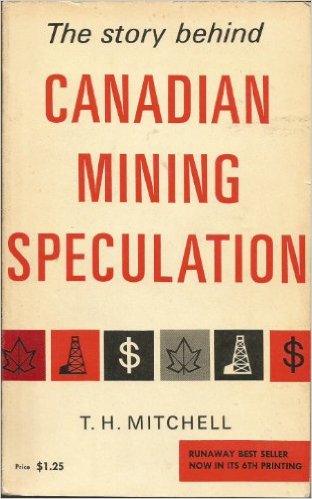
An Oldie but a Goodie: Canadian Mining Speculation

Canadian Mining Speculation

Canadian Mining Speculation

By T.H. Mitchell

Have you ever thought that the junior resource market might be manipulated? T.H. Mitchell says it is, and that you need to speculate in the market like the professionals if you want to be successful. Originally written in 1957, Canadian Mining Speculation is a book about the factors at play in the marketing of junior mining sector companies. While the book is old and some concepts are no longer relevant, Mitchell has some great words of wisdom for the reader. If you can find a copy, I recommend this one.

Mitchell argues that the junior market is dominated by professionals, and when ignorant of this fact, the average investor is destined to lose money. He defines professionals as those who consistently make profits within the sector (professionals, he claims, comprise 10% of the total buying/selling market), not necessarily those whose actual profession is somehow related to the stock market.

Professional Methods

Mitchell outlines 4 methods that professionals use to make profits, which I’ve outlined below. The fifth, propaganda, is used in conjunction with each of the first three methods as a way to sell the shares that the group has used to raise the price:

• Mark-Up Method – The professional group controls all of the floating share supply. Members within the group trade with each other, raising the price incrementally over a period of time. Once there is a significant enough margin for the group, promotion can be used to bring the general public into the stock.

• Fast-Rise Method – With this method, a rise in price is guaranteed, as the group buys up all of the available stock at market prices. The professionals will typically use this method if the stock is near a bottom and they have a significant enough cash position to buy all of the market orders. Once they have established a major position in the stock, they can begin promoting to the average investor, who will come in near the end to buy at the highest price!

• Slow-Rise Method – Much like the ‘Mark-Up Method,’ the group buys the stock – but only at reasonable prices. The result is a steady rise in price that’s then used to slowly bring in the public.

• Special Recommendation Method – This method can show up in a variety of ways, but is best characterized by the group paying for promotion from influential people, publications or websites. The marketing typically deals with ‘special situations’ and evokes an emotional response in the average investor, where they can’t help but buy into the hype.

“The speculator must take the attitude that all price movements are manipulations by the professional operators. This is not true, but to be on the safe side the speculator must operate as if it were…All news releases are promotion, all price changes are manipulations and all important discoveries are basically unimportant…pessimistic thinking…opposite of the optimistic public – can they expect to be a successful speculator over the long pull”
(Mitchell, Canadian Mining Speculation, 87).

“Sentiment makes prices, and professionals make sentiment; thus, professional operators make the prices” (Mitchell, Canadian Mining Speculation, 90).

“Anyone who intends on engaging in a speculative investment in the junior mining sector had better resign themselves to playing the game as the professionals do, for to run counter is to invite disaster” (Mitchell, Canadian Mining Speculation, 104).

Market Manipulation..?

The prospect of market manipulation is scary; it really makes you question whether you can make money if it’s rigged. Whether or not you agree with Mitchell about the manipulation, however, I tend to agree that if you take a somewhat defensive (pessimistic) posture, you’re less susceptible to the sector’s inherent pitfalls.

I’m not sure about the first 3 methods that Mitchell outlines, but I know the fourth is definitely used. Promotion is great when you’re on the right side of it, but it can evoke frustration or even jealousy when you’ve missed out on an opportunity. I think that chasing the promotional stories instead of searching for the quality companies is a dangerous road to travel. Stick to the basics of junior resource stock investing and ignore the hype – until it works in your favour and then you can enjoy it!

Worthy of a Place on Your Bookshelf

Canadian Mining Speculation may change the way you look at the junior market, or if nothing else, it will make you question your current beliefs in the system. Regardless of what side of the manipulation argument you stand on, I think Mitchell gives the reader a lot of sensible advice for successful speculation, which is ultimately what everyone wants. This is one to add to your list of must-reads.

Have a book review you’d like to share with the rest of the Junior Stock Review community? Get in touch with me via the contact form or you can reach me at juniorstockreview@gmail.com.

Until next time,

Brian

Posted on

Financial Products & Your Investing Persona

Junior Stock Review

*Disclaimer: The opinions expressed in this post are based on my experiences and should not be taken as financial/investing advice.

Like investing in junior companies, brokers and the people who write newsletters will play a large role in the value you take away, or in other words, how successful you are in the markets. Go for the best in the business, it’s well worth the money, but it isn’t as easy as picking a product with a great reputation, you’ve got to pick the product that’s best for you.

Over the years, my investing approach has gone through many permutations but I’ve finally found the one that works the best for me. My aim for this post is to share some ideas for how you, too, can discover the financial products that are right for you, without wasting as much time and money as I did.

Narrowing Your Search

There are a few questions you should ask yourself to help narrow the list of options for financial products:

1. Am I going to rely on the broker or newsletter writer to choose and track my investments, or am I going to do this myself?

Brokerages and newsletter writers have a lot of people and information at their disposal, which is put to good use when they choose and track their stock picks. In many of his speeches, Rick Rule has said, “you must be willing to put in an hour per company, per week, at a minimum, to properly pick and track a company.” Most junior company portfolios consist of at least 10 stocks, which translates to 10 hours a week. Do you have that kind of time? In the beginning, I thought I could do this. I tried, but working full time and taking this on in my spare time while my young children ran around me wasn’t practical, nor was it consistently effective.

2. Is the broker or newsletter author’s outlook on investing or speculating similar to mine?

I had a bad experience with this one, and it was entirely my fault. In mid 2013, I decided to hire a broker to manage some of my investments, for a number of reasons that I will cover later on. I’d been around the resource space long enough to be familiar with a lot of the players in the resource brokerage business, and chose the firm with which I wanted to work. After completing all of the paperwork, I was set up with a broker whom I met to review how my money would be invested. After this meeting, I left feeling completely deflated; the broker had a totally different outlook on the market than I did, not only from a macro outlook, but also from a junior company perspective. He didn’t want anything to do with the juniors and I had specifically chosen that brokerage because I wanted to invest in the junior market. I bit my tongue and let him invest my money as he saw fit. The consequence was that I was never happy with the outcome. Finally, in the summer of 2014, I asked to work with someone else, and from that first phone call with the new broker, I couldn’t have been happier. Our risk outlooks were very similar; he loves the juniors and is, in my opinion, very adept at picking stocks. I should have made the change earlier!

3.What is my risk appetite? Am I okay with potentially losing it all?

Your risk appetite is something that you really need to define, because speculation in the junior market is risky business and shouldn’t be taken lightly. Mistakes will cost you.

4. How much money do you have to invest?

Many experts suggest holding a portfolio of several junior companies to combat the risk of putting all of your eggs in one basket. Considering the risk level and the odds of success, when you get a winner you really want to make it count. Give this some thought. Is buying $100 worth of a junior, hitting a 10-bagger and selling the position for $1000 really worth it? The cheaper letters typically cover the larger CAP companies, which make them a better choice for those with smaller cash positions, as you don’t necessarily need to spread your risk as much as with the juniors.

5. How much do I want to spend on the product?

This question is tied in with the size of your portfolio; if I have $5000 to invest and the newsletter I’m considering costs $1000, I’m 20% in the hole before I even start. For the top newsletters, maybe this isn’t a problem, as they give you the best chance to succeed. But, I’m still not convinced this is the best product for you to buy. I would be looking in the $100 to $200 range, supplemented with library late fees!

6. How many others are getting the same advice?

Typically, the more money that you spend on advice, the smaller the audience is for that advice. This is a huge advantage as you aren’t competing with as many speculators for the same stock, when buying or selling. A lot of companies that have multiple tiers in their products will piggy-back stock picks, meaning the highest payers get in first and then each level gets their chance accordingly. This is a situation where being on the right side of a promotion can really help.

Product Example

Casey Research is a great example for these questions as they have a line of products at different price points and risk levels. For instance, for the entry level speculator, they have Casey Resource Investor which covers large MCAP resource companies that have much lower risk levels than the juniors and the newsletter cost is only around $100.

Their mid-level newsletter is the International Speculator, which covers junior resource companies. The risk level is significantly higher and so is the cost, coming in at $2000. However, the upside potential of the returns is much higher.

Finally, they have their ALERT service, which doesn’t have a set issue schedule and is released as the editor, Louis James, finds great opportunities – all be it, very risky ones. His picks can range from micro CAP explorers to large MCAP companies. Last time I checked, the ALERT service topped out at $5000, which is definitely on the high side for newsletters, or at least the newsletters with which I’m familiar.

Things to consider: If I’m going to spend $5000 on a newsletter, I better have a large enough cash position to make it worth my while to spend that much for advice. On the other hand, you are buying the newsletter company’s best ideas and sharing them with a much smaller audience. My experience is that you usually get what you pay for. In this specific instance, I’m not saying that Casey’s letters are good or bad, they just illustrate the point I’m trying to make. There’s a lot of choice, pick what is going to work for you and know what to expect from the money that you spend.

Remember, be very selective in who you let into your circle of influence, pick the best people and products for you. You may not find the right formula without some less than ideal learning experiences along the way, and that’s fine, just persevere and figure out what works – you don’t want to miss the bull market!

If you have any experiences or formulas for successful speculation in the junior resource sector that you would like to share, please let me know, and I’ll feature it in a post. You can reach me via the contact us form or send me an email at juniorstockreview@gmail.com. Also, I can be found on CEO.ca with the handle @Leni.

Until next time,

Brian

Posted on

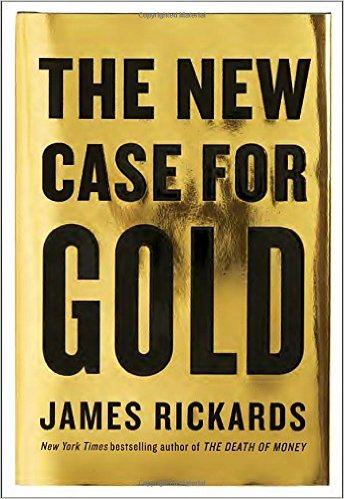
The New Case for Gold Review

The New Case for Gold

Rickards’ Best Yet: Get the Goods on Gold in this Short, Value-Packed Book

For those who have never read a book written by James Rickards before, you’re in for a treat. In my opinion, he’s at his best in the newly released, The New Case for Gold. Now, if you have read one of Rickards’ books before, you know that they often run over 300 pages – not something you can easily rip through in a couple of evenings after work. The New Case for Gold, however, is a value packed 170 pages with his thesis organized into 6 concise chapters, making it something you could dig into on your lunch break.

Accessible Investing Knowledge & News

There’s something to be said for the length of a book, newsletter or other investment resource, how easy it is to get through it, and if you can take what you learned and easily apply it or put it into action. That stuff matters, because at the end of the day, why spend the money on investment tools that take you 6 months to get through (if you ever finish them) and the only action they see is when you use them as coasters? Not to say that short is always better, because there are a lot of resources that are concise and still not worth the paper they’re printed on. What I’m saying is try to choose the resources that are going to best compliment your learning style, time constraints and interests. But, I’m getting sidetracked…

Gold Investing Newcomers Will Appreciate This Book

I really enjoyed this book, but having read many of Rickards’ other books, I didn’t feel I learned anything I hadn’t heard before. For anyone new to investing in gold, on the other hand, the book is a real asset because he’s assembled all of the best information concerning his thesis for gold investment in one concisely written book – I’m highlighting the brevity of this book because it’s somewhat of an anomaly for Rickards. Those who have read their share of monetary books, such as myself, may not discover anything earth shattering in The New Case for Gold, but if you’re looking for information to confirm if you’re investing correctly, this a great source.

Gold Is Money

Rickards cuts to the chase and gives the thesis for the book early in the introduction:

“Gold is money…monetary standards based on gold are possible, even desirable, and in the absence of an official gold standard, individuals should go on a personal gold standard, by buying gold, to preserve wealth.”
~Rickards, The New Case for Gold, 2

Rickards uses 6 chapters to explain his case for gold as money and why you need to make it a part of your personal investment portfolio. These chapters are titled:

Gold and the Fed – A look at US monetary policy past, present and future.

Gold is Money – A history of gold in the world monetary system and a look at what gold isn’t and why that’s a good thing.

“Understanding gold provides us with a frame of reference for understanding the future in the international monetary system” (Rickards, 56).

These ideas and facts are the reasons I first started investing in gold. They have since led me to the junior mining sector, where the ultimate leverage to the gold price exists.

Gold is Insurance – A look into the mathematical side of the world economy and the theory used to model it.

Gold is Constant – A look at the gold price and why you should change your perspective from the gold price rising and falling to the currency price rising and falling in relation to gold.

If you follow Rickards’ arguments in the previous chapters then this one won’t be difficult to wrap your head around.

“July 2015, China updated its official gold reserves…to show 1,658 tons…up from 1,054 tons in 2009” (Rickards, 92).

China’s assent into the world economic powerhouses will be predicated on its acceptance into the International Monetary Fund’s basket of currencies that back the world currency – the SDR (Special Drawing Rights). To do this, gold will play a major role in supporting the Reminibi (Yuang), thus the major push for gold consumption. China is not only the world’s largest producer (it consumes all production), but also the largest importer. Rickards believes that the Chinese gold holding is much higher:

“China’s figures are deceptively low…there are perhaps 3,000 additional tons…in an agency called the State Adminstration of Foreign Exchange” (Rickards, 92).

Gold is Resilient – A comparison of gold to the other mainstream investment vehicles of the world, mainly America’s stock exchanges, and why you are at risk for holding your wealth electronically.

This may be the least discussed topic outside of the ‘conspiracy theory’ realm of commentary, but it’s something that I believe people should take much more seriously as our lives become more and more digitized!

“As a 21st century investor, I don’t want all of my wealth in digital form…I want part of it in a tangible form, such as gold” (Rickards, 147).

How to Acquire Gold – A summary of all the ways you can invest in gold.

I think most of us are fairly familiar with many of the ways to invest in gold; purchase physical bullion, shares in ETFs such as GLD, Sprott Physical Trusts, mining stock shares and international storage banks such as Gold Money. It is, however, interesting to read the pluses and minuses that Rickards’ attributes each of the various ways to invest in gold – check them out!

Collapse. Yup, As In The Collapse Of The World Economy

Ultimately, Rickards believes the world economy is headed for collapse with a major monetary crisis forcing the world’s powers into a third major meeting to sort out a solution:

“When the next collapse comes, there will be another meeting such as those held in Genoa in 1922 and Bretton Woods in 1944” (Rickards, 43).

To weather this coming storm, Rickards encourages a conservative 10%, of investable assets, allocation in gold. With the ideas and facts laid out in this book, you must ask yourself “what are the new rules of the game and how can I survive it?”

Famously, the late Richard Russell used to say, “in times like this, it isn’t who profits the most, it is who loses the least.” If that truly is the case, we’re in for a bumpy road, one that the majority of the population is NOT ready for! Are you?

Is This The Gold Book You’ve Been Looking For?

For those who are new to the gold thesis and want to improve their knowledge of the metal, this is a great place to start because you won’t find another book that describes the case for gold so succinctly without glossing over any points that are necessary to the argument. Like I said, if you’ve been at the gold game for a while, you shouldn’t expect to unlock any new secrets while reading Rickards’ latest, but at 170 pages, this is a book you can add to your collection and return to any time you’re looking to reaffirm your stance on gold.

Until next time,

Brian

Posted on

Seeking Wisdom: A Look at Emotion & Decision Making

seeking wisdom

One of the Most Valuable Lessons You Can Learn as an Investor

I usually wait until I’ve read the entire book before I write a review, but in the case of Seeking Wisdom, a book written by Peter Bevelin, the first five chapters describe what is, in my opinion, one of the most important concepts any current or soon-to-be investor can learn. Considering this, I decided to write a preliminary review to share Bevelin’s take on emotion and decision making, and how this relates to investing.

Allowing Emotion to Drive Investment Decisions – My Experience

The worst investment decisions I’ve made were rooted in emotion. I’ve taken heavy losses because I failed to challenge my original beliefs and have hung onto a stock for too long, or bought a stock based on a ‘hot tip’ from someone whom I thought was ‘in the know.’ In retrospect, I’m glad that I can recognize and admit where I went wrong, and I’m sure as heck going to make a concerted effort to minimize the role emotion plays in my investment decision making in the future.

In Seeking Wisdom, Bevelin explores what influences our thinking, the psychology of misjudgements and the physics and mathematics of misjudgements. I think this information is the single most important piece of investing advice that a person can learn. People can be lucky or confuse a bull market with brains, but having this type of awareness and knowledge can help position you for success in any situation that the market presents.

Wise Advice from One of the World’s Most Successful

“I would say if Charlie (Munger) and I have any advantage it’s not that we are smarter, it is because we are more rational. We don’t let other people’s opinions interfere with our thoughts…we get fearful when others are greedy and we try and get greedy when others are fearful.”
~Warren Buffet (Seeking Wisdom, 35)

If you want to succeed in the investment world – and I’m sure you do – Buffet’s words are ones to remember. The crowd is influenced by emotion, so by doing the opposite, you’re giving yourself a margin of safety that will set you up for potentially life-changing returns – especially in the junior market.

Applying Buffet’s wisdom to the current junior gold market, it appears that the first quarter of 2016 is the transition from a bear to bull. Those that have resisted buying along the bottom (afraid when others are afraid) have missed out on major sector gains. Personally, my portfolio has shot up 50%, a truly astounding number in such a short period of time, but that’s the upside of the junior sector.

Reasons for Misjudgements

Understanding the psychological tendencies or biases that influence us subconsciously is vital for learning how to overcome them. I’ve selected the biases that I believe are most applicable to investing, as described by Bevelin:

• Bias from mere association – seeing situations as identical because they seem similar
• Self-serving bias – overly positive view of our abilities, being overly optimistic
• Bias from consistency tendency – being consistent with our prior commitments and ideas even when acting against our best interest or in the face of disconfirming evidence
• Impatience – valuing the present above the future
• Bias from over-influence by social proof – imitating the behaviour of many others. Crowd folly.
• Emotional arousal – making hasty judgements under the influence of intense emotion

~ Peter Bevelin (Seeking Wisdom, 39)

These are just a few of the 28 biases that Bevelin discusses. Read them carefully and try to understand how they play a role in the misjudgements people make in life and in investing. Think back to some of the situations where the decisions you’ve made have led to less than stellar results, or maybe even big losses.

“Am I Wrong?”

This is a question you need to ask yourself constantly, whether it’s about a macro trend in the market or about a company in which you’re invested. Becoming emotionally invested in our position can blind us from seeing the truth.
Bevelin remarks,

“Often we prefer to hear supporting reasons for our beliefs; think ourselves as more talented than others, and make the best of bad situations” (Seeking Wisdom, 17).

On numerous occasions, I’ve found myself looking for confirmation or evidence that supports what I feel is the right choice, and felt amazing when someone agrees with me, whether it’s the author of a newsletter, a famous broker or colleague. That said, I’ve also shunned the opposing position prematurely, disregarding valid points and theses only because they didn’t align with what I felt to be true. In retrospect , the opposing position is exactly where I need to start; who better to highlight the potential downfalls or unanswered questions of a company or a trend?

This may seem like a hard thing to put into practice, because an opposing position shakes your confidence and can make you question your ability to thoroughly analyze a situation. But it shouldn’t. Instead, we should look to opposing positions to give us the whole picture, or a way to see the story from both sides of the fence.

Quotations to Consider

“Behaviour that is rewarded on an unpredictable basis has the highest rate of response and is the most difficult to extinguish. For example, this is how gamblers are rewarded” (Peter Bevelin, 44).

“A few accidental connections between a ritual and favourable consequence suffice to set up and maintain the behaviour in spite of many non-reinforced instances” (B.F. Skinner, Superstition in the Pigeon, Journal of Experimental Psychology, 38, 1948).

“We deny and distort reality to feel more comfortable, especially when reality threatens our self interest” (Peter Bevelin, 59).

“We put a higher value on the things that we already own…This is why many companies offer money-back guarantees on their products” (Peter Bevelin, 68).

Ain’t No Room for Emotion in Investing

Emotion has no place in the investing decisions that we make. We need to make decisions based on facts, not HYPE!
I’m really looking forward to reading the second half of this book and to seeing what other valuable information I can glean. Whether you’ve been investing for some time and have done your fair share of emotion-filled decision making, or you’re just starting to wet your feet in the market, do yourself a favour and pick up a copy of this book. In my opinion, what Bevelin describes is one of the most important lessons you can learn, when it comes to investing.

Until next time,

Brian

Posted on

Invest like an Insider

Junior Stock Review

Insiders

One of the best ways to make money in the junior resource market is to follow the moves (buying and selling) made by those that have inside interest in the company that you want to buy or sell. Typically, when someone speaks of insider trading, people immediately think of it in a negative light – but it doesn’t have to be. The Canadian Securities Administrators (CSA), or Securities and Exchange Commission (SEC) in the United States, have criteria in which people who are deemed insiders can purchase or sell their own stock without the threat of reprisal.

By definition, an insider is:

“Director or senior officer of a company, as well as any person or entity that beneficially owns more than 10% of a company’s voting shares. For purposes of insider trading, the definition is expanded to include anyone who trades a company’s shares based on material non-public knowledge.”
~http://www.investopedia.com/terms/i/insider.asp (Feb.22/2016)

Walking the Talk

I have personally used insider buying as a trigger to add to my positions. My most recent example of this is November of 2014, I doubled down on True Gold Mining (TGM), as Executive Chairman Mark O’Dea made a few fairly large buys while the stock took a big hit because of the political issues in Burkina Faso. Mr. O’Dea is highly respected within the mining industry and one of the main reasons I originally invested in TGM, so when he used the political turmoil to add to his position, I thought it was a no-brainer to follow suit. Now, I will admit, there is a lot of risk associated with Africa, especially when you are investing more money into an area that is clearly under duress, but this is when a speculator truly gets the chance to hit a home run. Over the course of 2015, the stock trended lower, but so did most of the junior mining sector. Over time, however, I believe that it will be one of my best speculations.

One thing that I haven’t done is used insider selling to trigger me to reduce or sell one of my positions. What I have done, and you should feel comfortable doing this, as well, is call the company and ask to speak to the insider that sold the shares – I ask them ‘why.’ You may be surprised how accessible some of these insiders are. I was.

Getting in the KNOW

How do you find out when insiders are buying and selling? Besides knowing someone that is in the “know” within the industry, I suggest opening a FREE online account with Canadianinsider.com. I believe you can track a maximum of 25 companies (for free), and they will email you when insider trading has occurred. Also, for a fee, you can purchase full insider buying reports for whichever company you like.

One other FREE service that appears to have the same potential benefit for tracking insider buying and selling can be found at chat.ceo.ca. More information to follow on this, as I have just registered for the application and have yet to use it. Also, I do have a pending interview with the application’s creator, Tommy Humphreys, on March 5th. I hope my conversation with him will shed more light on the application’s uses and how it can benefit us, the investors.

Until next time,

Brian

Posted on

Right on the Money Review

Right on the Money

By Doug Casey

My Introduction to Doug Casey: A Turning Point

When I was introduced to Doug Casey, it was a major turning point in my life. In 2008, my brother-in-law raved about a company that wrote newsletters, called Casey Research. He spoke about the massive gains he had made through their stock picks and about the glut of information they provided on the global economy.

My curiosity was sparked; what was with this gold obsession and why do they think the market is so screwed up? I started with Conversations with Casey, a free publication that was sent directly to my inbox, each and every Wednesday. Doug would have conversations with Louis James (Casey Research’s International Speculator Editor) about a ton of different things, but typically topics that related to what was going on in the economy at that time.

Needless to say, I was hooked on Doug’s view of the world and excited by the success he’s enjoyed while putting his world view to work to make money. I couldn’t get enough of his writing, I bought all of his books; The International Man, Crisis Investing, Strategic Investing, etc,. and I became an avid reader of a couple of his monthly newsletters, mainly The Casey Report and The International Speculator.

Right on the Money, at a Glance

I forget when it changed, but Conversations with Casey no longer exists in its original form. It left the free Wednesday publication and moved to the monthly newsletter, The Casey Report, and from there, has mostly vanished. You can, however, check out all of the best conversations in Doug’s latest book, Right on the Money.

Doug has chosen to include the conversations pertaining to investing and what he’s best known for – speculation. The book is broken down into five parts: An Economy in Trouble, The Art of Investing, A Moral Minority, You and Me and the Other 8 Billion, and finally, Wrestling for Countries.

Each of these sections is very different in terms of their focus, however, they all tie together to present a particular view of the global economy, and most importantly, to shed light on what it is that you need to do to survive and prosper. An amazing thing Doug does is that he ties philosophy and psychology with investing and/or speculation. With a great deal of travelling and successful business deals under his belt, Doug’s real-world experience gives him a leg-up on the average Joe investor, as he has a much better understanding of how the global economy works, and especially, how it’s all tied together.

Speculation

Doug earned his fortune from the speculative investments he’s made over the course of his adult life. In fact, Doug credits the bulk of his fortune to three specific specualtions; “an accident (Diamond Fields), a scam (Bre-X) and a psychotic break (Nevsun)” (Casey, 72). Doug talks about each of these winning speculations in great detail in the book.

If you’re new to this, you might be asking yourself, ‘what is speculation, anyway?’

“A speculator is someone who allocates capital in order to profit from distortions in the market caused by government intervention” (Casey, 68).

Currently, we’re living in a time where there has been unprecedented government intervention in the global economy through money printing and extremely low interest rates. If you haven’t already, educate yourself on this subject and Doug’s comments will be that much more meaningful, not to mention actionable.

Actionable Advice

Purchasing gold is an absolute must. I could go into all of the reasons why, but I think you’re better off reading about it from someone like Doug, or start with Mike Maloney’s, A Guide to Investing in Gold and Silver. In both cases, the authors’ theses with regards to precious metals are very clear, and in my view, undisputable.

Purchasing the physical metal is most likely the best way to start, as it’s the easiest to understand. And, if you believe the metal price is going to go up, this is what you need to buy. That said, leverage to the gold price, or the ultimate in speculative gains, junior mining stocks give you the best bang for your buck. The caveat to this is that you NEED to understand the risk of what exactly you’re getting into. These are the most volatile stocks in the world, and succumbing to emotion or investing in a company that you know nothing about can be the fastest way to separate you from your money.

In the chapter, Doug Casey on Winning Speculations (Casey, 67), Doug outlines his strategy; The Eight Ps of Resource Stock Evaluation, for speculating in the juniors. This is a must-read and a must-follow for anyone intending to buy junior stocks.

Doug’s best piece of advice within this chapter:

“The first P is people. No matter how great the rest of the Ps are, if you don’t have confidence in the people, you can’t have confidence in the rest of the story” (Casey, 71).

It’s all about the people and their track record. The resource sector has a bunch of serially successful people, these are the guys you want to speculate in because they’re the only ones with which you have any real chance of making money. Spend your research time finding these people and let them show you what you need to buy.

A Must-Read for Anyone Looking to Speculate

I’ve really only grazed the surface of what this book covers, because it’s impossible to condense everything into just one review. I believe Doug’s comments on speculation are the most important in the book, which is why I chose to focus my review largely in that area.

This is a great book to add to your collection and a must-read for anyone beginning their journey as a speculator. That said, I do feel that if you really want to glean as much value as you can from this book, you need to have some understanding of the current fiat monetary system, in which Doug’s views are rooted.

Until next time,

Brian

Posted on

The Death of Money

The Death of Money

By James Rickards

Disclaimer: To really make this a worthwhile read, I’d recommend that you first check out Guide to Investing in Gold and Silver, by Mike Maloney, as it provides the background or monetary system history that’s missing from Rickards’ book. Without some understanding of how the system works and has been working for the last 15 or so years, you’re going to miss the value in Rickards’ arguments or just find yourself totally lost. On To the Review…

Written in 2014, The Death of Money follows up where Rickards left off in his previous book, Currency Wars. He cites his experience working with the US government and federal agencies like the FBI and CIA to support his outlook for the future of the US dollar and its place in the global economy.

Truly, this book could be called, The Impending Lack of Confidence in the US Dollar, or something to that effect, because the ‘death of money’ and the coming collapse of the international monetary system is directly connected to the fate of the greenback.

Financial Warfare

Rickards uses examples of events from the last century to support his view that it’s only a matter of time before people lose confidence in the dollar. He starts by describing his involvement with Project Prophesy and the CIA and FBI, arguably the government’s two most important security agencies.

Prophesy was started after 9/11, in direct response to the pre-September 11th shorting of American Airlines and United Airlines. Millions of dollars were made by a bunch of short sellers who seemingly had the ability to see into the future, making massive bets on the demise of these companies. Rickards’ experience working with some of the largest banking organizations in America made him an obvious choice to work on a team that created a system to identify short-selling trends.

It’s not only terrorists that use the financial system to wreak havoc on targeted nations, however, as seemingly innocent countries partake in financial warfare, too. As Rickards explains,

the US also placed financial sanctions on Syria, actions that caused the Syrian pound to plummet 66% against the US dollar, in the course of just one year (July 2012 to July 2013). When combined with levels of inflation that rose as high as 200%, the Syrian government had no choice but to do business in their allies’ currencies (Rickards, 57).

This is just one example of the power of financial warfare and why it’s been such a popular and effective tactic throughout the ages. With the integration of the modern day global economy, it’s just that much easier to wage war in the financial markets. In the future, wars will start in cyberspace and systems such as the one created by Project Prophesy will be a country’s first line of defense.

Financial warfare is a commonly known threat, within the G20 and some of the other developing nations. However, it may be most prevalent within the BRICS nations: Brazil, Russia, India, China, and the newly added South Africa. These countries recognize their vulnerability to the US dollar and have taken enormous steps to insulate themselves against this massive umbrella, by creating their own BRICS nations banking system where trade can take place without the participation of the greenback.

The Eurozone

Rickards believes the Euro will play a major role in the future of the global economy, as their policies better reflect good economics. Specifically, the European Central Bank’s (ECB) belief that savings and trade are the best routes to growth, versus the Federal Reserve’s (Fed) borrowing and consumption model.
Coming out of their sovereign debt crisis of 2010 to 2011, the ECB’s plan for growth was detailed in the Berlin Consensus, which consisted of the following seven pillars*:

• Promotion of exports through innovation and technology
• Low corporate tax rates (most American Fortune 500 companies have bank accounts in Ireland)
• Low Inflation
• Investment in productive infrastructure (Gotthard Base Tunnel in Switzerland, for instance)
• Cooperative labour-management relations
• Globally competitive unit labour costs and labour mobility
• Positive business climate

(* Rickards, 121)

While Rickards says that both the EU and the US have been able to keep inflation rates low in recent years, Europe has done it without having to print anywhere near the same amount of money. He says that,

going forward, they have a lower potential for inflation than the States, as well. China, on the other hand, struggles with inflation because they continue to try to match the Federal Reserve’s printing of the dollar with their Yuan (Rickards, 122).

Rickards believes that this reality will draw more future investment and thus strengthen the Euro against its competitors, sealing it as a pillar within the global monetary system and its future with the Special Drawing Rights (SDR or World currency), which is controlled by the International Monetary Fund (IMF). The strength of the EU is further supported by Robert Mundell, who wrote about a single currency area in his 1961 article, A Theory of Optimum Currency Areas:

“In a currency area compromising many regions and single currency, the pace of inflation is set by the willingness of central authorities to allow unemployment in deficit regions…Unemployment could be avoided…if central banks agreed that the burden of international adjustment should fall on surplus countries , which would then inflate until employment in deficit countries is eliminated…a currency area…cannot prevent both unemployment and inflation among its members” (Mundell, The Death of Money, 125).

Rickards explains Mundell’s comments in context of the EU. To put it simply, he says that if capital from a wealthy nation shifted to a poor country, or some of the unemployed people in a poor country moved to a country where there was more capital, the unemployment problem could be solved without inflation (Rickards, 125).

This is a very effective explanation of Mundell’s comments and one that can’t be ignored when evaluating the EU’s place in the global economy.

The International Monetary Fund, at a Glance

As Rickards briefly describes in the Eurozone discussion, the International Monetary Fund (IMF), created at the 1944 Bretton Woods Conference (in the US), will play a major role in handling the collapse of the international monetary system. The IMF controls the distribution of what could be considered ‘world currency,’ the Special Drawing Rights (SDR). SDRs are made up of, or backed by, the 4 major currencies in the world: US Dollar, Japanese Yen, British Pound Sterling and the Euro. I found this section of the book particularly fascinating, as I had very little knowledge of the interworking of the IMF and the role it plays in the global economy. This section alone makes the book worth reading, in my opinion.

A lack of confidence in the US dollar will have a devastating effect on the global economy and will severely handicap the IMF’s ability to manipulate the markets in response to this crisis. Rickards believes that the answer is adopting the Chinese Yuan into the SDR basket.

Over the last 5 years, the course of action taken by the Chinese would indicate their inclusion in the SDR basket is exactly what they’re trying to achieve. As they continue to be both the largest producer of gold ounces and the largest consumer, they consume all domestic ounces produced and import ounces through the Shanghai Gold Exchange. The imported ounces are bought by government sovereign wealth funds and delivered to vaults within Shanghai. Sporadically, the Chinese have released updates on their gold holdings. Most recently, they have raised their official gold holding to around 1600 tons, which most believe is drastically understated from their actual position. This makes sense because they’ve continued to buy gold even throughout this very depressed gold market.

Rickards’ Conclusion

Rickards states:

Whether the loss of confidence in the dollar results from external threats or internal neglect, investors should ask two questions: What comes next and how can wealth be preserved in the transition?
“The dollar’s demise will take one of three paths. The first is world money, the SDR; the second is a gold standard; and the third is social disorder. Each of these outcomes can be foreseen, and each presents an asset-allocation strategy best able to preserve wealth” (Rickards, 292).

There is no way to tell which of these paths the dollar will take; you definitely need to arm yourself with the knowledge from this book and delve more deeply into these scenarios on your own.

Rickards goes on to give seven signs of warning that an unravelling is near*:
• The price of gold – rapid movements in the price, beyond the very typical 100 to 200 dollar swings
• Gold’s continued acquisition by central banks
• IMF governance reforms – Larger voting rights given to China and/or the inclusion of the Chinese Yuan into the SDR basket of currencies
• The failure of regulatory reform
• System Crashes- Repeats of the flash crash seen on May 6, 2010
• The end of QE and Abenomics – QE is over, for now, with the Fed raising rates in December 2015
• A Chinese Collapse – Started January 2016

(*Rickards, 295)

Takeaways – Rickards’ Investment Advice

The book ends with some really valuable investment advice that can be put into action, should it jive with your overall investment style:

• Gold – 10 to 20% of total investible assets
• Land
• Fine Art
• Alternative Funds
• Cash – A crash will deflate the market, cash allows you to buy low

~(Rickards, 298)

My Take on The Death of Money

I feel this book is a must-read for anyone interested in preserving their wealth, and unless you’re a billionaire that likes to piss away their money, I’m guessing that goes for pretty much everyone. That said, there were some parts of the book that I found a bit tedious, but you can use my review as your guide to identifying the sections where there’s real value to be gleaned, because all and all, it has some of the best and most current information out there. Pick up a copy and dive in!
Until next time,

Brian

Posted on

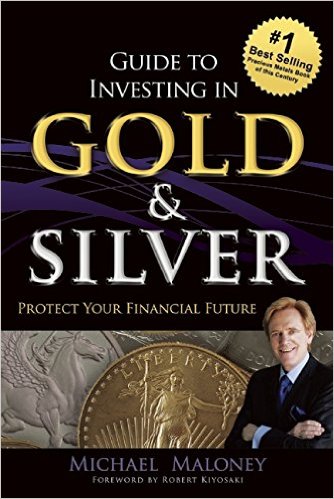
Guide to Investing in Gold & Silver Review

Guide to Investing in Gold & Silver

By Mike Maloney

Especially when I was just starting out in the world of investing, I found it really useful to be able to draw on books like this one for guidance. As the title would suggest, this book is a ‘how to’ and ‘why to’ invest in gold and silver. Maloney wrote the book back in 2005, but don’t get put off by the publication date. The information you find here will never expire, because as you will read, history repeats itself. Even after his final predictions have materialized, the book can still be a useful resource for monetary history.

The Man Behind the Book

Mike Maloney was born in Willamette, Oregon, but grew up in Southern California. Throughout his adult life, he has been an inventor and serial entrepreneur. Currently, he owns a couple of very popular websites, GoldSilver.com and PersonalGain.com (formerly, wealthcycles.com). His passion for monetary history and precious metals has propelled him to speak at numerous investment conferences around the world and to write this book, which has gone on to be one of the highest selling financial books of its age.

Easy to Read, Ready to Action

Without a doubt, I would say that what has made this book so popular is that it’s easy to read. By saying that, I don’t want to take away from the fact that there’s a great deal of value to be gleaned from its pages. What I mean is that this isn’t the type of book where you need to put your game face on every time you crack it open, but it’s the kind of book you’ll look forward to reading, even after working all day.

Maloney breaks the book down into four key parts, Yesterday, Today, Tomorrow and How to Invest in Precious Metals, which makes it easier for even those with very little knowledge of the market to take away some really actionable information. Now, let’s dig into those sections a little:

‘Yesterday’

This section of the book begins with a very in-depth history of money and currency, which, as Maloney stresses, are two very distinct things. Especially if you’re trying to decide whether investing in precious metals is right for you, this section is a must because it sets up the key ideas found in the rest of the book, one of the most important being that history is destined to repeat itself.

Maloney illustrates market history through highly useful charts, graphs and explanations, and has assembled a glut of information from a variety of resources listed in the back of the book.

Another great source of information is the list of videos Maloney cites in The Hidden Secrets of Money. For some, this may provide the best opportunity for learning how the financial system works, and how it affects us. These videos can be viewed at PersonalGain.com or on Mike’s YouTube channel. Especially if it means you can reduce the amount of reading you need to do to really get a handle on this stuff, this is a great resource.

‘Today’

For this book, present day is 2005; a time which, as we know, was very different from today. That said, most of the major chapters in the recently published 2015 edition include updated information that’s really useful if you’re looking for the most current information or validation of the predictions Maloney makes throughout the book.

‘Tomorrow’

For all intents and purposes, this section of the book addresses our current financial market.

“I think that we are now at the point where, over the next couple of years, real deflation will set in. It makes no difference that Janet Yellen is the new Fed head, deflation is every central banker’s worst nightmare and I believe they will all overreact again, fulfilling the second half of my predictions.” ~Mike Maloney

This quotation was taken from the updated 2015 version, which, at least for now, appears to be at least half correct; commodities have been deflating since 2011 and probably the most important economic bell weather, oil, has seen a tremendous regression over the last year. Additionally, the Dow has plummeted to start the New Year, not enough technically for it to be considered a bear market, but there’s still a lot of time to fall.

In the first weeks of the New Year, there’s been a large decline in most major markets around the world. Could this be a repeat of 2008? Maybe. Maloney would probably say so and I bet he believes that even though the Fed raised rates in December, the Fed will have no choice but to lower rates and quantitative ease, once again.

“History repeats itself. When a civilization debases its currency supply, all that currency will once again come chasing that same tiny little pile of metal, and gold and silver will revalue themselves measured in those currencies. This will happen to the United States, just as it did to every empire in history.” ~Mike Maloney

This quotation represents Maloney’s grandest prediction; as you probably guessed, the end game for the global economy is tied to gold and silver, just like it has been throughout history. I have a hard time disagreeing with him…

Important Takeaways:

• Markets are cyclical, and the market is moving in favour of gold and silver
• Rising prices are a symptom of an inflated money supply
• After reading the chapter on How to Invest in Gold and Silver, buy yourself some form of bullion. Doing so is a great way to protect yourself and your family in any economic climate
• When we get to the point in the cycle where gold and silver are overvalued, you should sell to buy other assets
• One downside to buying gold and silver is the lack of cash flow

The Bottom Line

If you’re looking for a place to start your precious metals research, this is it. Then, be sure to check out the videos Maloney mentions and you’ve got a fantastic base from which to expand your reading.

Until next time,

Brian